Our Short List of 3


All 5 Picks at a Glance
| Product | Specs | Action |
|---|---|---|
 1. EGO Power+ LM2125SP — the battery self-propelled all-rounder | Check price on Amazon | |
| 2. Greenworks 80V 21-inch self-propelled mower (MO80L410) — high-voltage power with a steel deck | Check price on Amazon | |
| 3. PowerSmart 21-inch self-propelled gas mower (DB8621PRX) — the fuel-powered generalist | Check price on Amazon | |
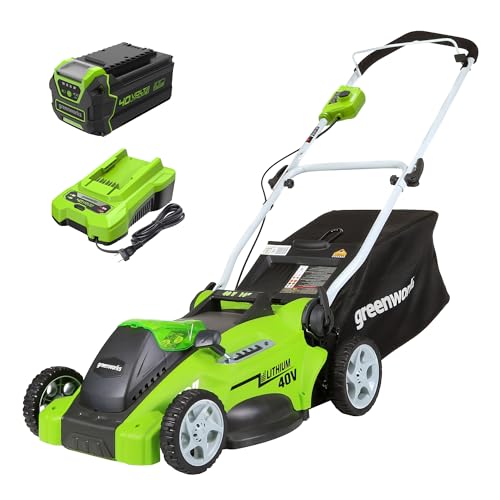 4. Greenworks 40V 16-inch push mower (25322) — the compact cordless for small lawns | Check price on Amazon | |
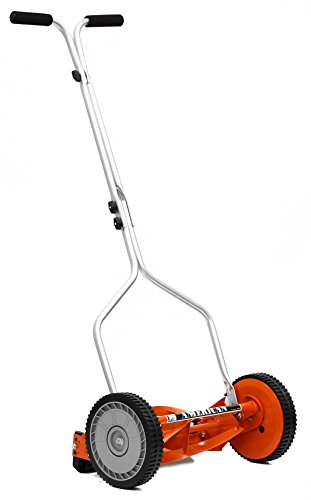 5. American Lawn Mower Company 1204-14 — the manual reel mower | Check price on Amazon |
Key takeaways
- Five lawn mowers worth having at home, from a self-propelled 56V battery mower and a 170cc gas model to a compact 40V push mower and a manual reel mower.
As an Amazon Associate, we earn from qualifying purchases made through links on this page.
“Best lawn mowers to have” is a broad phrase, so this roundup reads it the plain way: if a household is going to own one mower, which machines cover the job for the widest range of ordinary home lawns? There is no single answer, because the right machine depends on how the mower is powered and how much of the work it does for you. A self-propelled battery mower suits a medium lawn and an owner who wants to skip fuel and oil. A gas mower still makes sense where runtime is unlimited and the grass grows thick. A compact push mower fits a small, flat yard and a small storage corner, and a manual reel mower remains the quietest, simplest tool of all for a tiny patch of fine grass.
So instead of crowning one winner, this list picks one representative of each main type a homeowner is likely to consider: two battery self-propelled mowers at different voltage levels, one gas self-propelled mower, one compact battery push mower, and one manual reel mower. Every pick is a walk-behind machine for a residential lawn, and every specification below comes from the manufacturer.
One boundary: this is a general-purpose list. If your lawn has a special condition — ground that stays wet, a steep bank, very tall growth — a mower chosen for that condition will serve you better than a generalist.
What to look for in a lawn mower to own
Power source first. Battery mowers remove fuel, oil and pull cords from your routine, and they run far more quietly than gas, but runtime is finite and set by the battery in the kit. Gas mowers run as long as the tank and the fuel can hold out, and they shrug off thick growth, at the cost of noise, exhaust and seasonal engine care. Corded electric mowers never run out of charge but tie you to an extension lead and an outdoor socket, which is why none appears here: for a mower you will own for years, the cord is the compromise most households tire of first. A manual reel mower has no power source at all — you are the engine — which makes it silent and nearly maintenance-free, but only realistic on small, flat, regularly cut lawns.
Self-propelled or push. A self-propelled drive turns the wheels for you, and on anything above a small lawn, or on ground with any slope, that is the difference between guiding a machine and wrestling one. Rear-wheel drive keeps traction as a rear bag fills and weighs the back down. A push mower is lighter, simpler and cheaper to maintain, and on a small flat lawn the missing drive is barely missed.
Deck width and material. Twenty-one inches is the standard walk-behind width: wide enough to finish a medium lawn in reasonable time, narrow enough to pass a garden gate. Compact decks of sixteen inches or less trade passes for maneuverability and storage. Steel decks tolerate knocks and rough handling; composite decks never rust and keep weight down.
Cutting height range. Look for a range that reaches at least three and a half inches at the top end, because most lawn grasses stay healthiest cut high, and a single-lever adjustment that moves the whole deck at once saves real time compared with a lever at every wheel.
What happens to the clippings. A three-in-one mower mulches, bags and discharges, so you can switch with the season: mulch in normal weeks, bag when the grass is long or wet, discharge when you are cutting rough areas. A two-in-one design drops the discharge chute, which matters less than it sounds for tidy suburban lawns.
The battery platform question. With a cordless mower you are also buying into a battery family. A kit with the battery and charger included is the complete purchase; a platform shared with trimmers and blowers means the same packs serve all of them, and a second pack turns a forty-five-minute mower into an all-afternoon one.
The best lawn mowers to have
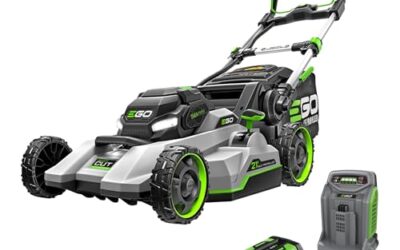
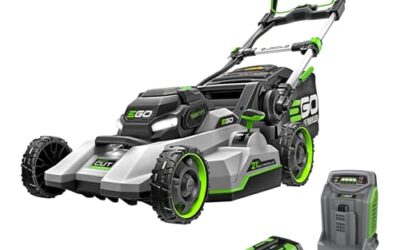
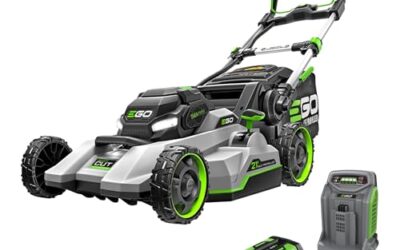
1. EGO Power+ LM2125SP — the battery self-propelled all-rounder
If one mower on this list fits the largest number of households, it is this one. The LM2125SP is a 21-inch self-propelled mower on EGO’s 56V platform, and the kit is complete: a 7.5Ah ARC Lithium battery and a rapid charger are in the box. EGO rates the brushless motor at up to 6.0 ft-lb of cutting torque and the runtime at up to sixty minutes on that battery, with a recharge time of about sixty minutes on the included charger, so a medium lawn can be cut and the pack refilled the same morning.
The drive system is the thoughtful part. Touch Drive engages the self-propel with palm pressure on the handle and sets the pace with a dial at your fingertips, so the mower matches your walking speed instead of dragging you at a fixed one. Seven cutting heights run from 1.25 to 4 inches on a single one-hand lever, the deck handles mulching, bagging and side discharge, and the grass bag holds two bushels. The handle folds flat, so the mower stores upright against a garage wall rather than squatting in the middle of the floor.
Who it is for: owners of small to medium lawns who want one complete kit, self-propelled help and no fuel routine, and anyone already holding EGO 56V batteries, since every pack in that family fits this mower.
Limitations to know: the deck is a weather-resistant composite rather than steel, so it shrugs off rust but is not the deck to bounce off rocks and edging stones. Sixty minutes is a ceiling, not a promise — thick or damp grass shortens a charge, and a large lawn will want a second battery.
2. Greenworks 80V 21-inch self-propelled mower (MO80L410) — high-voltage power with a steel deck
Greenworks’ 80V line is the high-voltage branch of its garden range, and the MO80L410 pairs that platform with the traditional build many buyers still prefer: a 21-inch steel deck. The brushless motor drives the blade and a rear-wheel self-propel system with variable speed, so the driven wheels sit under the weight of a filling rear bag, where traction is best. The kit includes a 4.0Ah battery and a rapid charger that Greenworks rates at sixty minutes to refill it.
Greenworks puts runtime at up to forty-five minutes on the included battery, which is the honest trade inside this pick: a stronger platform and a steel deck, against a shorter rated runtime than the EGO above. Working through the rest of the specification, it is a full-size mower in every other respect — three-in-one cutting with mulching, rear bagging and side discharge, a single-lever height adjustment with seven positions from 1-3/8 to 3-3/4 inches, and a listed weight of 64.2 pounds. The 80V battery also runs the wider Greenworks 80V tool family, which the manufacturer counts at more than seventy-five compatible tools.
Who it is for: buyers with medium lawns and thicker grass who want a steel deck and rear-wheel drive, and households planning to build a cordless tool collection on one high-voltage platform.
Limitations to know: forty-five minutes is the ceiling under favourable conditions, so a big lawn means a second battery or a mid-mow recharge. At 64.2 pounds it is also the heaviest machine here, which you will notice when lifting it into a vehicle or up shed steps, even though the drive does the work on the lawn itself.
3. PowerSmart 21-inch self-propelled gas mower (DB8621PRX) — the fuel-powered generalist
Gas is still the simplest answer to one question: what if the lawn is large, the grass is thick, and there is no time to wait on a charger? The PowerSmart DB8621PRX is built around a 170cc four-cycle overhead-valve engine, a displacement that sits squarely in the residential class, driving a 21-inch steel deck. It is self-propelled, so the engine does the pushing as well as the cutting, and it runs for exactly as long as you keep fuel in the tank.
The deck is a three-in-one design covering mulching, side discharge and rear bagging, with five cutting heights adjusted across the deck. PowerSmart lists the machine at 59 pounds, which is light for a self-propelled gas mower and helps when you are turning it in tight borders. It fires up with a recoil pull, and like every gas mower it asks for the familiar routine in return for its stamina: engine oil, a clean air filter, fuel care over winter and a spark plug now and then.
Who it is for: owners of medium to larger lawns, rural properties and thick-growing grass, and anyone whose mowing sessions run longer than a battery charge or who simply prefers a machine that refuels in a minute.
Limitations to know: it is the loudest option here by a wide margin and the only one producing exhaust at the point of use. The height adjustment gives five positions rather than the seven of the battery picks, and the recoil pull takes a firm tug — there is no push-button option on this model.
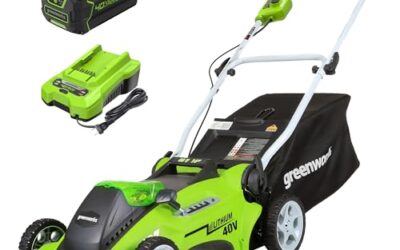
4. Greenworks 40V 16-inch push mower (25322) — the compact cordless for small lawns
Not every lawn needs twenty-one inches and a drive system. The Greenworks 25322 is a 16-inch push mower on the 40V platform, sold as a complete kit with a 4.0Ah battery and charger, and Greenworks rates the combination for lawns up to one-third of an acre per charge. At a listed 37.5 pounds it is easy to carry one-handed between a shed and the lawn, and it hangs or stands in a fraction of the space the full-size mowers need.
The specification is a two-in-one design — mulching and rear bagging, with no side discharge — and a single lever sets five cutting heights from 1-1/4 to 3-3/8 inches across the whole deck at once. The deck is a durable composite, which keeps the weight down and removes rust from the list of things to worry about. Because the 40V battery is shared across the Greenworks 40V family, owners of that platform’s trimmers and blowers can treat the included pack as a spare for everything else they own.
Who it is for: townhouses, small suburban plots and flat lawns where a full-size mower is more machine than the grass justifies, plus anyone with limited storage — a narrow shed, a garage corner, a balcony store.
Limitations to know: sixteen inches means more passes on anything beyond a small lawn, and with no self-propelled drive, slopes are your effort to climb. There is no side discharge, so very long grass has to be bagged in stages rather than thrown clear.
5. American Lawn Mower Company 1204-14 — the manual reel mower
The oldest design on this list is also the one with the least to go wrong. The 1204-14 is a push reel mower: a 14-inch, four-blade reel of heat-treated alloy steel that spins against a fixed bed knife as you walk, cutting grass with a scissor action instead of a powered blade’s tearing impact. There is no motor, no battery, no fuel and almost no noise — the sound is the reel turning and the grass clipping.
The numbers define a small-lawn tool. Cutting height adjusts from 0.5 to 1.75 inches, the lowest range here, which suits fine, low-growing lawns cut often. The mower weighs 19 pounds, rolls on 8.5-inch polymer wheels and needs no storage preparation beyond a dry corner. Maintenance is equally plain: keep the reel clean, and sharpen or back-lap the blades when the cut roughens. The manufacturer is candid about the ceiling — the mower handles grass up to about four inches tall and loses effectiveness beyond it.
Who it is for: owners of small, flat, fine-textured lawns who mow little and often, anyone who wants to mow early on a Sunday without announcing it to the street, and households with no outdoor power and no wish to store fuel.
Limitations to know: a reel mower rewards routine and punishes neglect — a lawn left for three weeks will defeat it, and twigs jam the reel where a rotary blade would chop through. The 1.75-inch maximum height is too low for grass types that should be kept tall, and there is no bag, so clippings stay on the lawn.
Comparison table
| Model | Power source | Drive | Deck | Cutting heights | Clipping modes |
|---|---|---|---|---|---|
| EGO Power+ LM2125SP | 56V battery, 7.5Ah included | Self-propelled, Touch Drive | 21 in composite | 7 positions, 1.25–4 in | Mulch, bag, side discharge |
| Greenworks 80V MO80L410 | 80V battery, 4.0Ah included | Self-propelled, rear-wheel | 21 in steel | 7 positions, 1-3/8–3-3/4 in | Mulch, bag, side discharge |
| PowerSmart DB8621PRX | 170cc gas engine | Self-propelled | 21 in steel | 5 positions | Mulch, bag, side discharge |
| Greenworks 40V 25322 | 40V battery, 4.0Ah included | Push | 16 in composite | 5 positions, 1-1/4–3-3/8 in | Mulch, bag |
| American Lawn Mower 1204-14 | Manual | Push | 14 in reel | 0.5–1.75 in | Clippings left on lawn |
Frequently asked questions
What type of mower should a first-time homeowner have?
For a typical small to medium lawn, a self-propelled battery mower such as the EGO LM2125SP is the easiest ownership package: a complete kit, no fuel or oil, and a drive system that does the pushing. Choose gas if your sessions run long or the grass grows thick, and a push or reel mower if the lawn is small and flat.
Is a self-propelled mower worth it over a push mower?
On a flat lawn small enough to finish in fifteen minutes, usually not — the push mower is lighter and simpler. The moment the lawn grows, slopes or thickens, self-propulsion earns its place, because the machine supplies the effort for the whole session instead of just the first ten minutes of it.
How long does a battery mower actually run?
Treat the manufacturer’s figure as a ceiling reached in light grass. The kits here are rated at up to sixty minutes (EGO 7.5Ah) and up to forty-five minutes (Greenworks 80V 4.0Ah); thick, long or damp grass pulls those numbers down. A second battery is the standard fix for a lawn at the edge of one charge.
Can one mower handle both mulching and bagging?
Yes — a three-in-one deck switches between mulching, bagging and discharge with the bag and mulch plug. Mulch for routine weeks so the clippings feed the lawn, and bag when the grass has grown long, because a mulching deck asked to process too much material at once leaves clumps behind.
How do I store a mower over winter?
Clean the deck, and store the machine dry and upright if the handle folds. For a gas mower, follow the manual on fuel — either run the carburettor dry or use stabilised fuel — and change the oil. For a battery mower, bring the packs indoors and store them partly charged rather than full or empty. A reel mower needs only a wipe-down and a dry corner.
Conclusion
The mower to have is the one matched to your lawn’s size and your own routine. For most households that is the EGO LM2125SP: a complete 56V kit with a pace-matching drive and a full height range. The Greenworks 80V MO80L410 answers with a steel deck and a high-voltage platform for thicker grass, while the PowerSmart DB8621PRX keeps the gas case simple — unlimited runtime and self-propelled help from a 170cc engine. Below full size, the Greenworks 40V 25322 covers small lawns at half the weight, and the American Lawn Mower 1204-14 remains the quiet, mechanical answer for a tiny patch cut often. Pick by power source and drive first, deck second, and the rest of the specification sheet falls into place.