Key takeaways
- Four mowers for rough-terrain yards compared on listing facts only: drive type, rear wheel size, steel decks and height adjustment ranges in full.
Rough ground defeats a mower in predictable ways: small rear wheels drop into ruts, a light deck bounces over bumps instead of cutting through them, and a push-only machine turns every slope into a workout. The facts that matter are the ones a listing states plainly: which wheels are driven, how large the rear wheels are, what the deck is made of, and how the cutting height adjusts.


The four mowers below were chosen from their Amazon product pages for exactly those stated facts, not for marketing claims about toughness. Two carry full listing captures; two rest on thinner evidence and say so in their entries, so you can weigh the verification as well as the machine before ordering. Between them they cover rear drive, front drive and two high-wheel patterns, which is the honest spread of what verifiable listings offer for this ground.
Quick Picks
As an Amazon Associate we earn from qualifying purchases.
| Product | Best for | Key spec from title |
|---|---|---|
| PowerSmart 21″ 3-in-1 Self-Propelled Mower (V8721S1) | Sloped, uneven yards where driven rear wheels and a steel deck do the hard work. | 170cc OHV engine, rear-wheel drive, steel deck |
| SENIX 21″ Self-Propelled Gas Lawn Mower (LSSG-M10) | Bumpy, rutted ground where tall rear wheels matter more than which end is driven. | 8″/11″ wheels, front-wheel drive, 170cc engine |
| YARDMAX 21″ 170cc High Rear Wheels Mower | Open, tufty ground where a high-wheel layout and a wide cut are the whole requirement. | 21-inch deck, 170cc engine, high rear wheels |
| Craftsman 21″ 159cc Self-Propelled Mower | Brand-loyal buyers who want self-propelled help on a moderately uneven lawn. | 21-inch deck, 159cc engine, self-propelled |
How to Choose
Driven wheels decide slope behaviour
A self-propelled mower drives either its front or its rear wheels, and the difference shows on rough ground. Rear drive keeps grip as the machine’s weight settles backward on a climb, while front drive pulls the mower forward and suits flatter, bumpier ground. Push-only machines ask your legs to do all of it. The listings here state their drive layouts plainly, so match the layout to your worst slope rather than to the average of your yard, because the worst patch is where a mower earns or loses its keep.
Rear wheel diameter is the rut specification
Tall rear wheels are the oldest rough-terrain answer in mower design: a larger wheel rolls over a rut, root or tuft that a small wheel drops into and stalls against. Only one listing in this set states its wheel sizes outright, 8-inch fronts and 11-inch rears, and that stated pair is worth more than any unstated promise. Where a listing gives no wheel figure, treat the terrain case as resting on drive and deck facts alone, and check the live page if wheel size is your deciding factor.
A steel deck tolerates what rough ground throws at it
Rough yards hide stones, stumps and edging that a mower deck will eventually meet. Listings here state steel decks on the two fully captured picks, and steel dents where composite shells can crack, which matters across years of knocks. Deck material is a stated fact worth weighing alongside engine size, because the engine decides how the machine cuts on day one while the deck decides whether it is still straight and true in year five of the same unforgiving ground.
Height range is how you avoid scalping bumps
Uneven ground punishes a fixed low cut: the deck rides up a bump and shaves it bare, then dips and misses the hollow. Six cutting heights, stated on both fully captured listings here, let you raise the cut for the rough sections and lower it for the tidy ones in seconds. A wide adjustment range is therefore a terrain feature, not a luxury. Buyers with two kinds of ground in one yard should rank the number of height positions high on their list.
The 4 Best Options
PowerSmart 21″ 3-in-1 Self-Propelled Mower (V8721S1)
This PowerSmart is the drive-first pick in the set. Its listing states a 170cc OHV engine turning the rear wheels, which is the layout that keeps traction when the driven wheels carry the machine’s weight over uneven ground, and a durable steel deck that shrugs off the knocks a lighter deck would dent on. Discharge options cover bagging, mulching and rear discharge, and six cutting heights let you raise the cut over lumpy patches rather than scalping them. Nothing in the listing asks you to take its word for toughness: the case rests on the drive layout and deck material it states.
Specs
- Engine: 170cc OHV per listing title
- Drive: rear-wheel drive, self-propelled per title
- Deck: 21-inch durable steel deck per title
- Discharge: 3-in-1 bagging, mulching and rear discharge per title
- Cutting heights: 6 positions per title
- Model: V8721S1 per listing
Best for: Sloped, uneven yards where driven rear wheels and a steel deck do the hard work.
Watch out for: Its listing does not state a rear wheel diameter, so do not buy it expecting a specific wheel size; the terrain case rests on the drive layout and deck alone.
SENIX 21″ Self-Propelled Gas Lawn Mower (LSSG-M10)
The SENIX carries the strongest single rough-terrain fact in this group: its listing states 11-inch rear wheels against 8-inch fronts, and tall rear wheels roll over ruts and tufts that stop smaller wheels dead. Power comes from a 170cc 4-cycle engine the listing figures at 3.8 HP, driving the front wheels in a single-speed self-propelled layout. The steel deck handles bagging, mulching and side discharge through a 1.7-bushel bag, and six height positions cover ground from tidy lawn to overgrown corner. For a yard whose problem is bumps rather than slopes, the wheel sizes are the argument.
Specs
- Engine: 170cc 4-cycle, 3.8 HP per listing
- Drive: single-speed front-wheel self-propelled per listing
- Wheels: 8-inch front, 11-inch rear per listing
- Deck: 21-inch steel deck per listing
- Discharge: 3-in-1 bagging, mulching, side discharge per listing
- Bag: 1.7-bushel; 6-position height adjustment per listing
- Model: LSSG-M10 per listing
Best for: Bumpy, rutted ground where tall rear wheels matter more than which end is driven.
Watch out for: The drive is front-wheel and single-speed: on steep slopes a front-drive machine can lose grip as weight shifts backward, so walk your steepest patch mentally before choosing it.
YARDMAX 21″ 170cc High Rear Wheels Mower
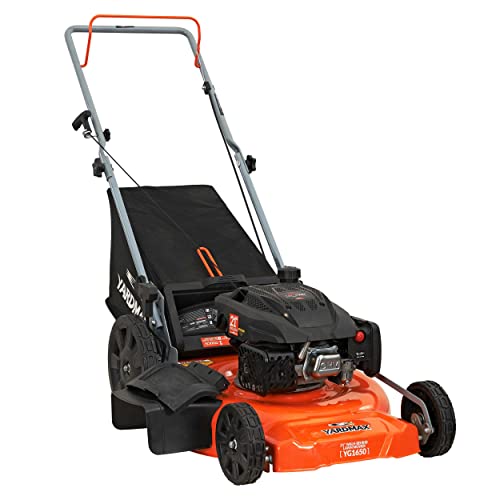
The YARDMAX entry is built around the feature its name states: high rear wheels on a 21-inch mower with a 170cc engine, the classic high-wheel formula for ground that is more meadow than lawn. Tall rear wheels raise the axle line, so the deck clears tufts and shallow ruts instead of ploughing into them, and the 21-inch cut keeps passes wide on open rough ground. The listing evidence behind this pick is thinner than the two machines above, resting on the product page address rather than a full captured specification table, so treat its stated facts as the headline ones and confirm the details live.
Specs
- Deck: 21 inches per listing title
- Engine: 170cc per title
- Wheels: high rear wheels per title
- Type: walk-behind mower per listing
Best for: Open, tufty ground where a high-wheel layout and a wide cut are the whole requirement.
Watch out for: Verification for this pick rests on the product page address alone, the thinnest evidence in this guide: open the live listing and confirm the full specification before ordering.
Craftsman 21″ 159cc Self-Propelled Mower
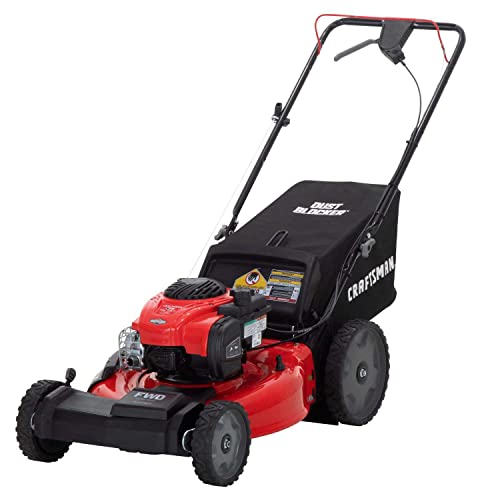
The Craftsman is the self-propelled route into this group for buyers who know the brand’s dealer and parts network. Its listing states a 21-inch deck and a 159cc engine with a self-propelled drive, which takes the pushing effort out of uneven ground even though the listing evidence captured for this guide does not include the wheel sizes or drive layout that would let it argue a stronger terrain case. It sits fourth here for exactly that reason: the stated facts support a general self-propelled mower for imperfect lawns, while the picks above state the specific wheel and drive facts rough ground rewards.
Specs
- Deck: 21 inches per listing title
- Engine: 159cc per title
- Drive: self-propelled per title
- Type: walk-behind mower per listing
Best for: Brand-loyal buyers who want self-propelled help on a moderately uneven lawn.
Watch out for: Like the YARDMAX above, this pick’s verification rests on the product page address rather than a full captured listing: confirm wheel size, drive type and deck material on the live page first.
Which One Fits Your Situation
A sloped yard with ruts and tufts
Take the PowerSmart V8721S1: rear-wheel drive for climbing grip and a steel deck for the knocks, with six heights to ride over the lumps instead of scalping them. Its six height positions also let you mow the rough half of the yard high and the tidy half low in a single session without stopping to guess.
A flat but badly rutted back lot
Take the SENIX LSSG-M10, the only listing here that states its wheel sizes: the 11-inch rears are built to roll across ruts that trap smaller wheels. Its 1.7-bushel bag and three discharge modes also mean the same machine handles the tidy front lawn on the following day without any adjustment beyond the height lever.
An open meadow-style plot mowed monthly
Take the YARDMAX high rear wheel mower for its tall-wheel layout and wide 21-inch cut, after confirming the full specification on its live listing page. Confirm the engine, deck and wheel wording on that page first, because this pick’s case is deliberately narrower than the two fully captured listings above it.
A moderately uneven lawn, brand support first
Take the Craftsman self-propelled mower: the drive takes the effort out of imperfect ground, and the brand’s parts network is the long-term comfort. Check its live page for the wheel and deck details its captured evidence does not settle, and the choice becomes a straightforward brand-and-support decision.
Common Mistakes
- Buying on engine size alone, when drive layout and rear wheel size decide how a mower actually behaves on rough ground.
- Assuming every self-propelled mower drives the same wheels, when front and rear drive behave very differently on a slope.
- Treating a high-wheel model name as a specification, instead of checking whether the listing states an actual rear wheel diameter.
- Cutting rough ground at the lowest height setting, then blaming the mower for scalped bumps the height lever would have prevented.
- Skipping the live-page check on thinly verified listings, when the two picks flagged here need their full specifications confirmed before ordering.
Frequently Asked Questions
Why is there no Troy-Bilt high-wheel mower in this guide?
The Troy-Bilt TB230B is the textbook answer to this keyword, with 11-inch high rear wheels in its retailer copy. However, no verifiable Amazon US listing for it could be captured, and this guide only prints products with a confirmed Amazon listing, so it is recorded here rather than included.
Which mower here states the largest rear wheels?
The SENIX LSSG-M10. Its listing states 11-inch rear wheels with 8-inch fronts, the only explicit wheel sizes in this set. The PowerSmart and Craftsman listings do not state wheel diameters, and the YARDMAX states high rear wheels without a figure.
Is front-wheel or rear-wheel drive better for rough terrain?
For slopes, rear-wheel drive keeps traction as weight shifts backward on a climb. For flat but rutted ground, either layout works and rear wheel diameter matters more. Match the drive to your steepest ground and the wheels to your roughest ground.
Are the YARDMAX and Craftsman picks verified the same way as the others?
No, and their entries say so. Their evidence rests on the product page address rather than a full captured listing, the weakest tier used in this guide. Confirm their complete specifications on the live Amazon pages before ordering either machine.