Key takeaways
- Wet, soggy lawn? These self-propelled mowers use all-wheel or rear-wheel drive, tall rear wheels and washout ports to grip soft ground and clear wet clippings.
As an Amazon Associate, we earn from qualifying purchases made through links on this page.


Some lawns never really dry out. A low-lying yard, heavy clay soil, a shaded corner that stays damp for days after rain — if that sounds familiar, you already know the usual problems. A mower that works fine on dry turf starts spinning its wheels on soft ground, the deck clogs with heavy green clippings, and you finish the job with ruts in the lawn and clumps smeared across it. The mower itself is rarely the whole problem, but its hardware decides how bad the experience gets.
This roundup focuses on the specifications that genuinely matter on wet soil: driven wheels that keep gripping when the ground is soft, tall rear wheels that roll over soggy turf instead of digging in, enough engine or motor torque to keep the blade turning through dense, waterlogged grass, and a deck you can rinse clean before wet clippings harden underneath it. Every pick below is self-propelled, because pushing a mower by hand through mud is how wheels start to slip and tear the surface.
One honest note before the picks: no walk-behind mower is waterproof, and no mower makes wet mowing a good idea in itself. These machines simply cope with damp conditions better than average. The trade-offs in the next section apply to all of them.
What wet ground does to a mower (and to your lawn)
Wet grass is heavier than dry grass, and it sticks to itself and to the underside of the deck. That is why clippings that would normally disperse instead form clumps, why mulching plugs the deck, and why a grass bag fills faster and weighs more than you expect. Soft soil adds a second problem: wheels that would roll cleanly on firm turf sink slightly, spin more easily, and can leave ruts or tear the surface when they lose grip, especially on slopes and in turns.
There are safety limits too. Never run a corded electric mower on wet ground — a trailing cable, standing water and damaged insulation are a dangerous mix, and no corded model belongs in this roundup for that reason. Battery and gas mowers are the realistic options, and even then you should wait until surface water has drained rather than mowing through puddles. Slopes deserve extra caution: wet grass underfoot is slippery for the operator as well as the machine, so mow across a slope rather than up and down it, wear footwear with real tread, and skip any bank that feels unstable. Finally, raise the cutting height a notch in wet conditions. A slightly longer cut stresses the lawn less and reduces the load on the blade.
What to look for in a mower for wet soil
Drive system first. This is the single biggest factor. All-wheel drive sends power to every wheel, so if one end of the mower starts to slip on soft ground, the other end keeps pulling. Rear-wheel drive is the next best thing, because the weight of a filling grass bag sits over the rear axle and presses the driven wheels into the turf. Front-wheel drive is the weakest layout here: as the rear-mounted bag fills with heavy wet clippings, weight shifts backwards, the front wheels get lighter, and they are the first to spin. A front-drive mower can still work on a flat, merely damp lawn, but it is a compromise on genuinely soft soil.
Tall rear wheels. Rear wheels of ten or eleven inches roll over soft, uneven ground with less resistance than small wheels, and they are less prone to digging a rut when the mower turns. Ball-bearing wheels are a plus because they keep rolling freely even when coated in wet debris.
A washout port. Wet clippings cement themselves under a deck. A garden-hose washout port lets you flush the deck after mowing without tipping the machine over, which matters far more in a wet climate than in a dry one. If a mower has no port, plan on scraping the deck by hand after every wet session.
Bagging and discharge options. Mulching is the first thing to abandon in wet grass — the clippings mat together instead of falling back into the lawn. A mower that can rear-bag or discharge gives you a way to keep the deck clear. Look for a bag with enough capacity that you are not stopping every few passes, and remember that a bag of wet clippings is heavy.
Torque and deck build. Waterlogged grass resists the blade, so engine torque (or the motor torque figure on a battery model) matters more than top speed. A steel deck tolerates the knocks of rough, soft ground and the extra cleaning this kind of mowing demands.
The best lawn mowers for wet soil
1. Husqvarna HU725AWDH — all-wheel drive for the softest ground
ASIN: B00N6XCGX2
The HU725AWDH (model 961450019) is the only walk-behind mower in this roundup that drives all four wheels, and for persistently wet soil that is exactly the right starting point. Husqvarna’s all-wheel-drive system uses a dual transmission to power the front and rear axles together, so the mower keeps moving when one end is on a slick patch. The Briggs & Stratton 725exi engine is a 163cc unit with a gross torque figure of 7.25 ft-lb, and it uses a ready-start system with no priming or choking.
The wheel package suits the brief as well: eight-inch front wheels and eleven-inch rear wheels, all on ball bearings, with an aggressive tread pattern. The 22-inch steel deck is a three-in-one design covering mulching, side discharge and rear bagging, it includes a deck wash feature for hosing out wet buildup, and a single set of controls gives nine cutting heights between one and four inches. Drive speed is variable and follows how hard you squeeze the handle control, which helps you slow down on the softest stretches instead of forcing the mower through.
Who it is for: owners of flat or gently sloped lawns that stay wet for much of the season, and anyone whose current rear-drive mower spins its wheels in the same damp corners week after week.
Limitations to know: this is an older Husqvarna platform, so it lacks the vertical-storage folding systems of newer designs and is a bulky machine to lift. It is recoil start only, with no electric-start option on this model.
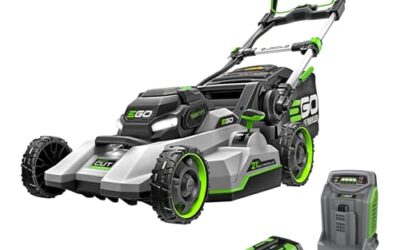
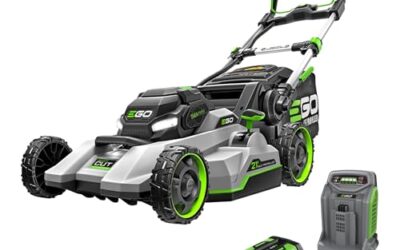
2. EGO Power+ LM2135SP — battery power with rear-wheel Touch Drive
ASIN: B0857KWHHC
The LM2135SP is the battery option that makes sense here, starting with its drive layout: the Touch Drive self-propel system drives the rear wheels, so traction stays where the weight is. EGO rates the motor at 7.0 ft-lb of torque, and the kit includes a 56V 7.5Ah battery and a rapid charger, with a manufacturer runtime figure of up to sixty minutes under standard conditions. The 21-inch Select Cut deck carries a multi-blade system and ships with a high-lift bagging blade, which is the configuration you want for wet grass because it moves more air and lifts heavy clippings into the bag instead of leaving them plastered under the deck.
EGO builds this mower with weather-resistant construction rated IPX4, which means it tolerates splashing water — useful when the lawn is damp and the air is drizzly. That rating has a limit worth stating plainly: IPX4 is not submergence protection, and EGO still expects the mower to be stored dry and kept out of standing water. Seven cutting positions cover roughly one and a half to four inches, and the mower folds for upright storage.
Who it is for: anyone already invested in the EGO 56V platform, and homeowners who want rear-wheel drive and strong bagging airflow without fuel, oil or pull cords.
Limitations to know: the deck is a composite rather than steel, and the sixty-minute runtime figure is a best case — thick wet grass works the motor harder and shortens a charge, so a large, permanently soggy lawn may need a second battery to finish in one session.
3. PowerSmart 21-inch 170cc self-propelled mower (V8721S1) — rear-wheel drive with ten-inch rear wheels
ASIN: B0GS5SHDW7
PowerSmart’s V8721S1 pairs the two specs that matter most here at the accessible end of the market: rear-wheel drive and ten-inch rear wheels. Power goes to the axle that carries the load, and the larger rear wheels help the mower track over soft patches rather than churning them. The 170cc overhead-valve gas engine drives a 21-inch steel deck with a three-in-one discharge setup — rear bagging, mulching and rear discharge — and six cutting heights running from 1.5 to 3.9 inches, adjusted with a single lever.
The grass bag holds 1.4 bushels, which is worth keeping in mind in wet conditions: wet clippings are dense, so expect to empty it more often than the capacity suggests. The handle folds down so the mower can be stored vertically, a small but real convenience in a crowded garage.
Who it is for: buyers with a medium lawn and recurring damp patches who want genuine rear-wheel drive and a steel deck without moving up to the premium brands.
Limitations to know: the listing does not include a deck washout port, so plan on scraping and rinsing the deck manually after wet sessions. The drive system is a straightforward self-propel setup rather than a pace-matching one, so you adapt to the mower’s speed instead of the other way round.
4. SENIX 21-inch self-propelled mower, 170cc (FWD) — the light, simple option for merely damp lawns

ASIN: B0GQ2L78JD
SENIX’s 21-inch mower (model A025054-A) runs a 170cc four-cycle engine rated at 3.8 horsepower and 6.5 ft-lb of torque, numbers that are respectable for thick, wet growth. The steel deck is a three-in-one design with bagging, mulching and side discharge, the grass bag holds 1.7 bushels — the largest in this roundup — and six cutting positions span 1.25 to 3.75 inches via dual levers. At a listed weight of 61.7 pounds it is also the lightest mower here, which helps when you need to manhandle a mower around a soft garden without driving it.
The honest caveat is in the drive layout: this is a single-speed front-wheel-drive mower. On a flat lawn that is damp rather than saturated, that is workable, and front drive does make the mower easy to tip back and pivot at the end of a row. But as the rear bag fills with wet clippings, weight moves off the driven front wheels, and they will spin sooner than a rear-drive mower’s would on the same ground.
Who it is for: smaller, flat lawns that get damp but drain reasonably well, where the ground is soft for a day rather than a season.
Limitations to know: front-wheel drive is the weakest layout for genuinely wet soil, for the reason above, and there is no variable-speed control — the drive runs at one pace.
5. CRAFTSMAN M215 — eleven-inch rear wheels and a dust-blocking bag
ASIN: B09SJ7182X
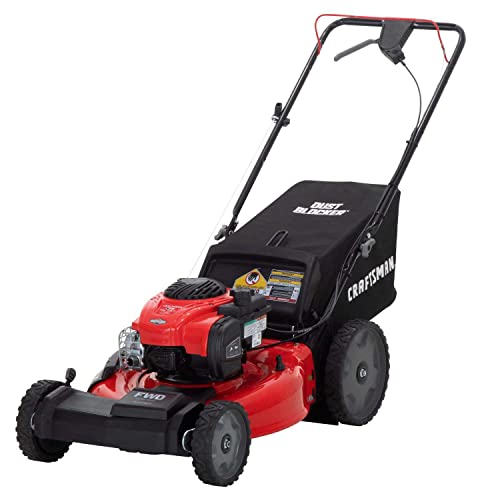
The M215 (model 12AVB2T2791) is a 21-inch, three-in-one mower built around a high-wheel chassis: eight-inch front wheels and eleven-inch rear wheels, the joint-tallest rears in this roundup, which help it roll through soft, rutted ground instead of ploughing into it. The 140cc overhead-valve engine uses auto choke, so starting is a simple pull with no primer bulb or choke lever to manage with cold, wet hands. Six cutting heights run from 1.25 to 3.75 inches with dual-lever adjustment.
For wet work, the useful details are the discharge flexibility — side discharge, rear discharge and mulching — and the rear bag’s dust-blocker design, which seals better around the deck opening and keeps more of what you collect inside the bag. A mulch kit is included in the box.
Who it is for: buyers who want the tall-wheel geometry and a widely supported brand for parts, and whose lawns are damp and uneven rather than steep.
Limitations to know: like the SENIX, the M215 is front-wheel drive, so the same warning applies — a full bag of wet clippings unloads the front wheels and costs traction, and on a slope that weakness shows up quickly. This variant’s listing does not include a deck washout port.
Comparison table
| Model | Drive | Deck | Rear wheels | Washout port | Power source |
|---|---|---|---|---|---|
| Husqvarna HU725AWDH | All-wheel drive, variable speed | 22 in steel | 11 in | Yes | 163cc gas |
| EGO Power+ LM2135SP | Rear-wheel drive, Touch Drive | 21 in composite | Standard | No | 56V battery, 7.5Ah included |
| PowerSmart V8721S1 | Rear-wheel drive | 21 in steel | 10 in | No | 170cc gas |
| SENIX 21 in 170cc | Front-wheel drive, single speed | 21 in steel | Standard | No | 170cc gas |
| CRAFTSMAN M215 | Front-wheel drive | 21 in steel | 11 in | No | 140cc gas |
Frequently asked questions
Can you mow grass when the soil is wet?
You can, within limits. Wait until standing water has drained and the surface is damp rather than saturated, raise the cutting height, and take less off per pass. Mowing saturated soil compacts it and invites ruts, so if the ground feels spongy enough to leave footprints filled with water, waiting a day is the better call.
Which drive type is best on wet ground?
All-wheel drive grips best because every wheel is powered. Rear-wheel drive is close behind and is the layout to choose if all-wheel drive is out of reach, because the weight of the grass bag presses the driven wheels into the turf. Front-wheel drive is the first to slip once the bag fills.
Should I mulch or bag when the grass is wet?
Bag or discharge. Wet clippings stick together, so mulching in wet conditions tends to clog the deck and drop clumps that smother the grass underneath. Bagging keeps the deck clear; just expect the bag to fill quickly and feel heavy.
How do I stop wet clippings clogging the deck?
Mow when the grass is as dry as the day allows, raise the deck a setting, slow your walking pace so the blade keeps up, and clean the underside after every wet session — a washout port makes that a two-minute hose job. A clogged deck also strains the engine, so it is maintenance, not cosmetics.
Is a battery mower safe to use on a wet lawn?
A battery mower with a stated weather-resistance rating, such as the IPX4 construction on the EGO in this roundup, is designed to tolerate splashes and damp conditions. That is very different from a corded electric mower, which should never be used on wet ground at all. Even with a battery model, avoid standing water and dry the machine before storing it.
Conclusion
For a lawn that stays wet, the drive system decides almost everything. The Husqvarna HU725AWDH is the strongest answer on pure traction, with all-wheel drive, eleven-inch rear wheels and a washout port in one package. The EGO LM2135SP is the pick for battery buyers, pairing rear-wheel drive with a high-lift bagging setup and splash-resistant construction. The PowerSmart V8721S1 delivers the same rear-drive formula in steel at the accessible end of the market, while the SENIX and the CRAFTSMAN M215 suit flatter, merely damp lawns — the M215 standing out for its tall rear wheels. Whichever you choose, mow high, bag instead of mulching, and rinse the deck afterwards; on wet soil, those habits matter almost as much as the machine.