Key takeaways
- Learn how to choose a car fire extinguisher for your vehicle, covering size, fire class and mount, so it is ready and within reach when seconds count.
- Top Pick: First Alert AUTO5
- Runner-up: First Alert AUTOMAR10
- Also consider: Amerex B417T
A car fire gives you very little time. Fuel, oil, wiring and hot metal sit close together, so a small flame can grow fast. A fire extinguisher will not save a car that is already burning hard, but the right unit, mounted within reach, can knock down a small fire while it is still small. This guide explains how to pick one that fits your car.
As an Amazon Associate, we earn from qualifying purchases.
Quick Answer
For most drivers, a compact 2.5-pound ABC dry chemical extinguisher with a vehicle bracket is the best balance of size, coverage and cost. It handles ordinary combustibles, flammable liquid and electrical fires in one unit. A 5-B:C can suits a glovebox, while a 1A:10B:C unit suits a trunk or cabin mount. Keep it within arm’s reach, check the gauge monthly, and never open the hood on an engine fire.
How to Choose a Car Fire Extinguisher
Match the Fire Classes to Your Car
Fire classes describe what is burning. Class A covers ordinary combustibles such as upholstery and paper. Class B covers flammable liquids such as gasoline and oil. Class C covers energized electrical equipment such as wiring and batteries. A car carries all three, so an ABC unit is the sensible default. A 5-B:C unit has no Class A coverage.
Pick a Size You Can Reach and Use
Discharge time is short: a compact can gives about eight to ten seconds, and a 2.5-pound unit about nine to fourteen, enough for a small fire at its base if you aim low and sweep. A 5-pound unit lasts longer and reaches further, yet it is harder to mount in a sedan cabin and heavier to handle one-handed. For a daily driver, 2.5 pounds is the sweet spot.
Dry Chemical or Clean Agent
Dry chemical ABC powder is the workhorse: affordable, covers three fire classes, and survives years in a car. Its drawback is the mess, since the powder is corrosive and can damage electronics and trim even after the fire is out. A clean agent unit uses a liquefied gas that turns into a vapor, leaves no residue, and is safe around engines and electronics. It costs more and usually carries a 2-B:C classification.
Mount It Where Your Hand Lands First
An extinguisher buried under luggage in the trunk is one you will not reach in time. The best mount is one you can reach from the driver’s seat without unbuckling: under the front seat, on the transmission tunnel, or on the side of the center console. Use a proper bracket, never a loose unit rolling around the cabin, where it can dent trim, jam under a pedal, or discharge by accident.
Gauge, Service Life and Heat
A pressure gauge tells you at a glance whether the unit is ready: check it monthly and look for the needle in the green zone. A unit with no gauge, such as a pressure-free stick, needs a different habit: check the body for damage and confirm the expiry date. Most disposable units carry a five to ten year warranty and are not rechargeable, while serviceable metal-valve units can be inspected and recharged. Keep it out of direct sun and never on the dashboard.
1. First Alert AUTO5

The AUTO5 is the classic glovebox extinguisher, small enough to live where you can actually reach it. It is a compact dry chemical can with a UL classification of 5-B:C, covering flammable liquid and electrical fires, the two fire types most likely to appear in a car. A heavy-duty mounting bracket comes with it, so you can fix it under a seat or on a trunk wall instead of letting it roll loose.
Its limits are honest ones. It has no Class A coverage, so a fire that reaches upholstery or carpet is beyond it. It is not rechargeable. A deal tracker showed it in stock and fulfilled by Amazon two days before this guide was written, so confirm the listing before you order.
Specs
- Agent: Sodium bicarbonate dry chemical
- UL classification: 5-B:C
- Weight: About 2.7 pounds
- Mount: Heavy-duty mounting bracket included
- Rechargeable: No
- Warranty: 10-year limited
- ASIN: B000P0DPGQ
2. First Alert AUTOMAR10
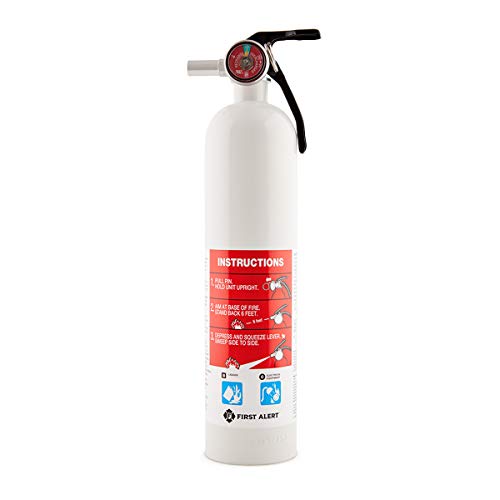
The AUTOMAR10 is the step up for drivers who want more agent and a unit that works in a car, a truck or a boat. It carries a UL classification of 10-B:C, doubling the flammable-liquid coverage of the AUTO5, and it is rechargeable, so a fire equipment shop can service it after use. A mounting bracket is included.
The extra coverage comes with extra bulk, so measure your mounting spot before you order. It is a B:C unit, so like the AUTO5 it has no Class A coverage for upholstery and trim fires. Multi-packs and the red GARAGE10 garage version are different listings, so confirm the model and color before you buy.
Specs
- Agent: Sodium bicarbonate dry chemical
- UL classification: 10-B:C
- Weight: About 2.75 pounds
- Mount: Mounting bracket included
- Rechargeable: Yes
- Warranty: 10-year limited
- ASIN: B000UHP9EU
3. Amerex B417T
The B417T is the shop-grade pick here, and the T in its model name means it ships with a vehicle bracket. It is a 2.5-pound ABC dry chemical unit with a UL classification of 1A:10B:C, so it covers ordinary combustibles as well as flammable liquid and electrical fires, the most complete coverage of any unit here. The anodized aluminum valve resists corrosion, and the unit is serviceable.
The B417T costs more than the First Alert cans and is a little larger, so it suits a trunk wall, a truck cab or an RV better than a glovebox. Its evidence is the weakest in this guide: no Amazon US crawl names its code in text, and the identity rests on a marketplace mirror plus a deal tracker showing an Amazon offer one day before this guide was written. Confirm the listing, the model and the stock carefully before you order.
Specs
- Agent: ABC dry chemical, monoammonium phosphate
- UL classification: 1A:10B:C
- Agent weight: 2.5 pounds
- Discharge time: About 9 seconds
- Range: 9 to 15 feet
- Valve: Anodized aluminum, with vehicle bracket
- ASIN: B084P5PPNC
4. H3R Performance HalGuard HG250B

The HalGuard HG250B is the clean agent pick, and it is the one to choose when the car itself matters as much as the fire. It uses Halotron, a liquefied gas that turns into a vapor, leaves no powder behind, and will not damage an engine bay or electronics. It carries a UL classification of 2-B:C, is rechargeable, and comes with a two-strap mounting bracket.
The trade-off is coverage: a 2-B:C classification covers a smaller area than a 1A:10B:C dry chemical unit of the same size, so you must get closer and aim well. The HG250B is the black 2.5-pound version, while the HG250R is the red version and the HG100 is the smaller 1.4-pound version, each with its own code, so confirm the color and model on the listing. Confirm stock before you order.
Specs
- Agent: Halotron clean agent, liquefied gas
- UL classification: 2-B:C
- Agent weight: 2.5 pounds
- Gross weight: About 5.4 pounds
- Height: About 14.8 inches
- Mount: Two-strap mounting bracket included
- Rechargeable: Yes
- ASIN: B005JV8ZXO
5. Element E50
The Element E50 is the most unusual pick here, and also the easiest to keep within reach. It is a stick about the size of a road flare, weighs about nine ounces, and discharges for about fifty seconds, several times longer than a comparable handheld bottle. It has no pressure vessel, no gauge and no moving parts, so nothing can leak or lose pressure in a hot car. It fights Class A, B, C and K fires with no corrosive residue.
Using it is different from using a bottle extinguisher: you strike it like a flare to light it, then hold it at the base of the fire while it discharges. Read the instructions before you need it, not during a fire. It does not carry a UL listing, so check the rules for any event, fleet or inspection that requires one. Mounts and kits are separate listings, so confirm you are ordering the stick itself.
Specs
- Agent: Potassium-based aerosol, solid stick
- Fire classes: A, B, C and K
- Discharge time: About 50 seconds
- Weight: About 9 ounces
- Length: About the size of a road flare
- Maintenance: None, no pressure vessel, no gauge
- ASIN:
Who Should Skip
Skip the idea that any unit in this guide can handle a traction battery fire in an electric car: a battery pack fire needs professional crews, so get out and call for help. Skip a small glovebox can if you drive a large truck, an RV or a tow vehicle with room for a bigger unit. Skip buying one if you will not mount it within reach: a unit buried under cargo is no help. And never use one on an engine fire with the hood closed: opening the hood feeds the fire with air, so leave it shut, get out and call for help.
FAQ
Can a small car extinguisher put out an engine fire?
It can knock down a small, visible fire at its base, such as a smoldering wire. It cannot handle a fully involved engine fire, especially with the hood closed. If flames are spreading or smoke is heavy, get out and call for help.
Where is the best place to mount a car fire extinguisher?
Within arm’s reach of the driver is best: under the front seat, on the transmission tunnel or on the side of the center console. A trunk mount works only if you can open it fast. Always use a proper bracket and never let the unit roll loose.
How often should I check my car fire extinguisher?
Check the pressure gauge monthly and look for the needle in the green zone. Inspect the body for dents or rust, and confirm the pull pin and tamper seal are intact. Replace a disposable unit at the end of its service life.
Does a dry chemical extinguisher damage a car?
Dry chemical powder is corrosive and gets into every crevice, so it can damage electronics, trim and paint even after the fire is out. If protecting the car matters as much as stopping the fire, a clean agent unit or a pressure-free stick leaves no corrosive residue behind.
Final Verdict
For most drivers, the Amerex B417T is the strongest single choice: its 1A:10B:C coverage handles all three fire classes, and its serviceable metal valve lasts for years. The First Alert AUTO5 is the smallest unit that still matters, fitting a glovebox and covering fuel and electrical fires. The AUTOMAR10 suits a truck, an RV or a boat, where its 10-B:C coverage and rechargeable build earn their keep. The HalGuard HG250B suits a classic or performance car, where powder damage would hurt as much as the fire. The Element E50 gives the longest discharge and is the easiest to keep within reach. Whichever you choose, mount it where your hand lands first, check it monthly, and get out and call for help when a fire is bigger than a small flame you can see and reach.