We independently review everything we recommend. When you buy through our links, we may earn a commission. As an Amazon Associate we earn from qualifying purchases.
Best GPS Trackers for Cars: 5 Real-Time Vehicle Picks
Compare five real-time GPS trackers for cars, including magnetic battery models and OBD plug-ins, with update rates, plan needs, and fit notes.
Compare five real-time GPS trackers for cars, including magnetic battery models and OBD plug-ins, with update rates, plan needs, and fit notes.
A real-time GPS tracker for a car does a different job from a Bluetooth finder tag. Instead of relying on nearby phones to relay a location, a vehicle tracker combines GPS positioning with a cellular connection, so it can report where the car is, where it has been, and when it starts moving. That makes these devices useful for keeping an eye on a family car, a teen driver’s trips, a work vehicle, or a parked car you want to locate quickly.
The five trackers below split into two camps. Battery-powered magnetic models from LandAirSea, Spytec, and Tracki attach to metal in seconds and can be moved between vehicles. Plug-in models from Bouncie and Vyncs draw power from the OBD-II port and add driving-behavior and vehicle-health data. Every cellular tracker here needs an active service plan from its maker to report location, and each maker sells that plan separately from the hardware. Only install a tracker on a vehicle you own or are authorized to track, and check local laws first, because tracking rules vary by state and country.
As an Amazon Associate, we earn from qualifying purchases.
Quick answer
For most car owners, the LandAirSea 54 is the simplest start: it sticks to metal with a built-in magnet, needs no wiring, and reports through a mature app. If you would rather never charge anything, the Bouncie plugs into the OBD-II port and adds speed and braking alerts. The Tracki is the smallest pick, while the Spytec GL300 and Vyncs suit long battery life and an annual plan.
The LandAirSea 54 is a small round puck built around one idea: attach it and forget it. A strong internal magnet lets it grip a flat metal surface under or inside the vehicle, and the sealed housing is waterproof, so road spray and weather are not a concern while it is mounted outside the cabin. Because it runs on its own rechargeable battery, there is no wiring to install and nothing to connect to the car’s electrical system.
Tracking runs through LandAirSea’s SilverCloud platform, on iOS, Android, and the web. The maker offers real-time location updates, geofence alerts when the vehicle enters or leaves a set area, and route playback. Update frequency depends on the plan and settings you choose, and faster updates use more battery, so most owners pick a middle setting. The 54 is made in the USA from domestic and imported parts, and the maker sells it for vehicles, trailers, and equipment alike.
Who it’s for: owners who want a no-install tracker they can move between a car, trailer, or piece of equipment. Who should skip: drivers who want engine diagnostics or driving-behavior reports, which this battery puck does not provide.
The Spytec GL300, now sold under the Spytec Atlas name, is another battery-powered tracker aimed at vehicles and valuable assets. It ships with the M2 waterproof magnetic case in the box, so the tracker can ride on a frame rail protected from water and road grime. Spytec states a battery life of up to 14 days, with real-world life depending on how often you ask the device to report its position.
The GL300 reports through the Hapn platform, which provides live map tracking, trip history, geofence boundaries, and alerts for movement and speed. Update intervals are configurable, and Spytec markets near-real-time updates on its faster settings. The hardware is compact enough to sit in a glove box or console, and a hardwire kit is available separately for permanent power.
Who it’s for: owners who want a magnetic tracker with the protective case included and a long stated battery life. Who should skip: anyone who dislikes recharging devices, since a plug-in OBD tracker never needs a charge.
3. Bouncie GPS Tracker for Vehicles
3. Bouncie GPS Tracker for Vehicles
Connection: OBD-II plug-in, most vehicles from 1996 onward
Network: 4G LTE cellular with GPS positioning
Power: vehicle-powered through the port, no battery
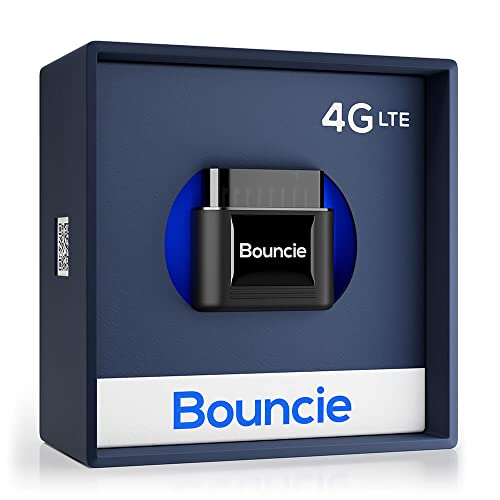
Bouncie takes the plug-in route. The small dongle connects to the OBD-II port fitted to most vehicles built from 1996 onward, usually under the dash near the steering column. Installation takes seconds, the car powers the device, and there is no battery to manage. Because it reads data from the port, it also reports on how the vehicle is driven.
Alongside real-time location and route history, Bouncie monitors speed, hard braking, rapid acceleration, and idle time, and it can send geo-fence alerts and accident notifications. That mix makes it a common pick for parents of teen drivers and for small fleets that want trip records without installing wired hardware. Bouncie requires a monthly subscription, and the maker states there are no activation fees and that you can cancel anytime. One trade-off: the device is visible at the port and can be unplugged, so it is a monitoring tool rather than a hidden one.
Who it’s for: families and small fleets that want location plus driving-behavior insight with zero charging. Who should skip: owners of vehicles without an OBD-II port, or anyone who needs a tracker that stays hidden.
4. Tracki GPS Tracker
4. Tracki GPS Tracker
Model: TRKM010A
Size: 1.75 x 1.5 x 0.55 inches, 1.26 ounces
Network: 4G LTE with 3G and 2G fallback, worldwide coverage
Battery: rechargeable, up to 5 days with frequent updates per the maker
Tracki’s pitch is size. At 1.75 by 1.5 by 0.55 inches and 1.26 ounces, this is one of the smallest cellular GPS trackers sold, which makes it easy to place in a console, a door pocket, or a bag that travels with the car. Despite the size, it carries a full 4G LTE radio with older-network fallback and a built-in SIM that the maker says works worldwide, so the same device can cross borders.
The rechargeable battery is the compromise. Tracki states up to five days of life with frequent real-time updates, stretching much longer in battery-save modes that report a few times per day. An optional extended battery in a magnetic waterproof box is sold separately for under-vehicle mounting and longer intervals between charges. The tracker includes magnet, belt clip, keychain, and lanyard attachments, plus an SOS button, and it sends speed, movement, and geofence alerts through the Tracki app. A subscription is required, and the maker includes a lifetime warranty.
Who it’s for: owners who need the smallest possible tracker for a car or for gear that moves between vehicles. Who should skip: anyone who wants weeks between charges at fast update rates, since the tiny battery trades life for size.
5. Vyncs GPS Tracker for Vehicles
Vyncs is the second OBD-II plug-in on this list, and its hook is the plan structure. The maker markets the device with no monthly fee; instead, an activation fee and an annual plan apply under the maker’s terms, which suits owners who prefer one payment decision a year. Like Bouncie, it plugs into the OBD-II port of most vehicles from 1996 onward and runs on vehicle power.
Because the device has no internal battery, it cannot report while unplugged, but Vyncs turns that into a feature with tamper alerts if the unit is removed and reconnected. Beyond location and trip history, Vyncs reports driving alerts, geo-fence crossings, fuel economy figures, and OBD fault codes, so a check-engine light can come with the code that triggered it. That diagnostic angle makes Vyncs as much a maintenance tool as a tracker for families and small fleets.
Specs
Model: VYNCSLINK-001
Connection: OBD-II plug-in, most vehicles from 1996 onward
Alerts: tamper alert if the device is unplugged and reconnected
Plan: no monthly fee per the maker; activation fee and annual plan apply
Who it’s for: owners who want OBD diagnostics and tracking together and prefer an annual plan over a monthly one. Who should skip: anyone tracking a trailer, motorcycle, or classic vehicle without a compatible OBD-II port.
How these GPS trackers compare
Power source is the first decision. Battery trackers like the LandAirSea 54, Spytec GL300, and Tracki mount anywhere metal or hidden inside the cabin, work on trailers and older vehicles, and need periodic recharging. OBD plug-ins like the Bouncie and Vyncs never need charging and add driving and diagnostic data, but they only fit vehicles with an OBD-II port and sit in plain view. Update rate is the second decision: every maker ties reporting frequency to plan settings, and faster updates always cost battery life on the portable models.
The plan itself is the third decision. All five trackers need an active maker plan to report over the cellular network; they differ in whether the plan is billed monthly or annually and what update speeds it includes, so read the current plan terms before buying the hardware. No tracker on this list, or anywhere else, can promise that a stolen vehicle will be recovered; a tracker simply reports location data to its app while it has power and signal. Alternatives outside this list include hardwired trackers and Bluetooth finders, which are cheaper but only report when a phone passes nearby.
FAQ
Do car GPS trackers require a subscription?
Almost every real-time cellular tracker does, including all five models here. The device uses a cellular network to send its position to the maker’s servers, and the plan pays for that connection and the app. The structure differs: Bouncie uses a monthly plan you can cancel anytime, while Vyncs uses an activation fee plus an annual plan. Check the maker’s current plan terms before you buy, because the hardware alone cannot report location.
Will an OBD tracker drain my car battery?
Plug-in trackers draw a small amount of power from the port, and makers design them to sleep when the vehicle is off. A healthy vehicle battery handles this easily in normal use. If a car sits unused for many weeks, any connected accessory adds some draw, so owners who store a vehicle long-term often unplug accessories or use a battery maintainer. Battery-powered trackers avoid the question entirely because they run on their own cells.
Can I put a GPS tracker on someone else’s car?
Only track vehicles you own or that you have clear authorization to track, such as a company vehicle covered by a workplace policy. Secretly tracking a vehicle belonging to someone else is illegal in many places and can carry serious penalties. Laws differ by state and country, and they change, so check the rules where you live before installing any tracker, and when in doubt get the vehicle owner’s written permission.
How accurate are car GPS trackers, and how often do they update?
Accuracy and update intervals are maker-stated figures that depend on the plan, the settings you choose, and the environment. Trackers generally pinpoint a vehicle to within a short distance under open sky, while parking garages, tunnels, and dense urban areas can delay or distort a fix. Update intervals range from seconds to minutes; faster reporting gives a smoother route history but drains battery models sooner, so most owners pick a middle setting.
Final verdict
Pick by power source first. The LandAirSea 54 is the easiest magnetic tracker to live with, the Spytec GL300 adds an included waterproof case and a long stated battery life, and the Tracki wins when small size matters most. If your car has an OBD-II port and you never want to charge anything, the Bouncie adds driving-behavior reports on a monthly plan, while the Vyncs pairs tracking with fault-code diagnostics on an annual plan. Whichever you choose, confirm the plan terms and your local tracking laws before the first drive.
Product and ASIN Reference
Product
ASIN
LandAirSea 54 GPS Tracker
B06XVZ6Y4T
Spytec GL300 GPS Tracker (Spytec Atlas)
B00L2KBB8C
Bouncie GPS Tracker for Vehicles
B07H8NS5MS
Tracki GPS Tracker (TRKM010A)
B07N4DHFZM
Vyncs GPS Tracker for Vehicles (VYNCSLINK-001)
B01HSODG10
C
Carros Editorial Team
We compare specs, materials and verified owner reviews before a product earns a spot. Rankings are never paid.
Affiliate disclosure. As an Amazon Associate we earn from qualifying purchases at no extra cost to you. Prices accurate as of the date shown.
The best rechargeable CR123A batteries compared by chemistry, voltage and charger: SureFire LiFePO4, Tenergy and Nitecore RCR123A cells, plus the safety checks that matter first.
The best batteries for the Traxxas 1/16 E-Revo VXL compared: Traxxas Series 1 NiMH, HRB and Gens ace 2S 2200mAh LiPo packs, fit, connectors, parallel running, and charging safety.
How to choose a 510 thread battery for Brass Knuckles vape cartridges: voltage ranges, draw vs button activation, cartridge fit, charging, and safety checks explained.
How to pick a stereo keyboard amplifier with balanced line outputs, from power and speaker size to XLR outs, stereo linking, and the five models that set the standard.
A radial drill press swings its head out from the column to reach wide boards and off-centre holes. Learn how swing, spindle travel, speeds and chuck size decide the right machine.
Diamond-frame commuter e-bikes explained: fit, motor feel, battery range, and the equipment that makes a daily ride work, plus the mistakes to avoid before buying.
Find the best tablets under 125 for streaming, reading, school and family use. Compare five budget tablets with strong battery life and sharp displays.
Find the best window fans to cool a room with our guide to twin-blade models, thermostats, remotes, and window fit — compare airflow, noise, and controls.


 4. Tracki GPS Tracker