We independently review everything we recommend. When you buy through our links, we may earn a commission. As an Amazon Associate we earn from qualifying purchases.
5 Best Chainsaws for Homeowners and Yards (November 2026)
Compare the best chainsaws for homeowners and yards, from battery saws to gas models, with bar length, chain speed, weight, and safety notes.
Compare the best chainsaws for homeowners and yards, from battery saws to gas models, with bar length, chain speed, weight, and safety notes.
A chainsaw earns its keep the first time a storm drops a limb across the driveway or a dead tree leans toward the fence. The right saw cuts cleanly, runs without fuss, and feels balanced in your hands, while the wrong one stalls, shakes, and turns a simple job into a wrestling match. Homeowners do not need a logging saw. They need a tool matched to the wood in their own yard, whether that means trimming branches, cutting firewood, or clearing fallen trunks after a storm.
This guide compares five saws that cover the three ways homeowners power a cut: gas, battery, and corded electric. Bar lengths run from 12 to 20 inches, so every pick below suits a different kind of work, from light pruning to felling small trees. Each listing names the bar length, power source, chain speed, and weight, plus the safety features that matter when a spinning chain sits inches from your hands.
Quick Picks
As an Amazon Associate we earn from qualifying purchases
Product
Best for
Key spec
Husqvarna 455 Rancher
Heavy felling and firewood
20-inch bar, 55.5cc gas engine
Makita XGT 18-Inch Chainsaw Kit
Cordless power for big limbs
18-inch bar, 40V MAX, 5,020 FPM chain speed
BLACK+DECKER LCS1240
Light pruning and small branches
12-inch bar, 40V MAX battery
BLACK+DECKER CS1518
Long corded cuts near the house
18-inch bar, 15-amp motor
CRAFTSMAN V20 CMCCS620M1
Compact cordless trimming
12-inch bar, 4.0Ah battery, 44 ft/s chain speed
How to Choose
Bar Length and the Wood You Cut
Bar length sets the thickest log a saw can cut in one pass, so match it to the wood you actually face. A 12-inch bar handles branches, saplings, and small limbs with ease and keeps the saw light enough to control overhead. A 16-inch bar covers most yard trees and storm cleanup. An 18-inch or 20-inch bar suits firewood rounds and felling small trees, though the extra length adds weight and demands more care. Longer bars also need more power to keep the chain moving through dense wood. Measure the thickest trunk you cut in a normal year, then pick a bar a couple of inches longer than that.
Gas, Battery, or Corded Power
Each power source trades freedom for upkeep in a different way. Gas saws deliver the most cutting force and run as long as the tank holds fuel, which suits large properties and heavy firewood work, yet they need fuel mixing, air filter care, and seasonal storage steps. Battery saws fire up with a trigger pull, run quietly, and need almost no upkeep, though runtime ends when the battery drains and big bars drain packs fast. Corded saws give steady power with no battery or fuel at all, but the cord ties you to an outlet and an extension cord. Pick the source that fits how far from the house you work.
Chain Speed, Weight, and Handling
Chain speed decides how fast the teeth bite, while weight decides how long you can hold the saw steady. A faster chain clears chips quickly and leaves a cleaner cut, which matters on hardwood and thick rounds. A lighter saw reduces arm fatigue on overhead pruning and long sessions, and a balanced body keeps the bar from diving or wandering. Check the weight with the battery fitted or the tank full, since the bare-tool figure hides several pounds. Hold the saw the way you would in the yard and feel where the weight sits. A saw that feels nose-heavy will wear you out before the job ends.
Safety Features Worth Checking
A chainsaw demands respect, and the built-in safety gear is not decoration. A chain brake stops the chain in a kickback, and every saw in this guide carries one. Look for a hand guard that shields your forward hand, a throttle lockout that keeps the chain still until you squeeze the trigger on purpose, and a chain catcher that holds a broken chain away from your hands. Low-kickback bars and chains reduce the chance of the bar tip grabbing and throwing the saw upward. Automatic oilers keep the bar and chain lubricated, which lowers friction and heat. Pair these features with chaps, gloves, eye protection, and hearing protection every time you cut.
The 5 Best Options
Husqvarna 455 Rancher
The 455 Rancher is the gas workhorse of this group, built for homeowners who cut firewood in volume and fell small to medium trees. Its 55.5cc X-Torq engine drives a 20-inch bar with enough force to work through oak and maple rounds without bogging down, and the chain moves at 65.62 feet per second at full power. A centrifugal air cleaning system keeps dust away from the filter, so the saw holds its power through long sessions. At 13.2 pounds without cutting gear it is the heaviest pick here, yet the balance and low-vibration design keep it manageable for steady ground work.
Specs
55.5cc X-Torq 2-stroke engine, 3.5 horsepower
20-inch bar with 0.375-inch pitch, 0.058-inch gauge chain
Chain speed 65.62 feet per second at max power
Weight 13.2 pounds without cutting equipment
15 fluid ounce fuel tank
Chain brake, low-vibration design, centrifugal air cleaning
2-year limited warranty
Best for: Homeowners who cut firewood in volume and fell small to medium trees.
Watch out for: Heaviest saw in this guide, and gas upkeep adds fuel mixing and seasonal storage steps.
ASIN: B00080MIJI
Makita XGT 18-Inch Chainsaw Kit
Top Pick
Makita XGT 18-Inch Chainsaw Kit
Best for: Homeowners who want cordless power for thick limbs and already own Makita 40V tools.
40V MAX XGT brushless motor, 3.6 horsepower
18-inch guide bar, 3/8-inch low-profile pitch, 0.050-inch gauge chain
This Makita kit brings near-gas cutting force to a battery platform, with an 18-inch bar driven by a brushless 40V MAX XGT motor. The chain runs at 5,020 feet per minute, fast enough to slice thick limbs without the saw bogging down, and the 5.0Ah battery plus rapid charger come in the box, so it works straight out of the case. Tool-free chain adjustment lets you set tension without hunting for a wrench, and the saw weighs 14.7 pounds with the battery fitted. It suits homeowners already building around Makita 40V tools, since the battery swaps across the whole XGT range. Confirm availability before ordering, since kit listings shift.
BLACK+DECKER LCS1240
Runner-Up
BLACK+DECKER LCS1240
Best for: Pruning, trimming, and cutting small branches with a light cordless saw.
The LCS1240 is the light, friendly saw for pruning, trimming, and cutting small branches around the yard. Its 12-inch bar and 40V MAX battery keep the whole tool at 10.4 pounds, so it stays easy to lift overhead and guide through tight spots between branches. One charge handles an average of 60 cuts through 4×4 pine, and the battery holds its charge for up to 18 months in storage, so the saw is ready even after months in the shed. An automatic oiler and tool-free chain tensioning keep upkeep simple, while the wraparound handle lets you cut from different angles.
BLACK+DECKER CS1518
BLACK+DECKER CS1518
Best for: Steady corded cutting near the house, from storm cleanup to firewood rounds.
The CS1518 is a corded saw for homeowners who work near the house and want steady power without batteries or fuel. Its 15-amp motor drives an 18-inch Oregon low-kickback bar and chain, cutting branches up to 18 inches thick, and the cord means the saw never runs down mid-cut. Automatic oiling keeps the bar lubricated, tool-free tensioning makes chain adjustment quick, and a chain brake adds a layer of protection. At 12.5 pounds it sits in the middle of this group for weight, and the push-button ignition removes the pull cord entirely. An extension cord is the only limit on where it can go.
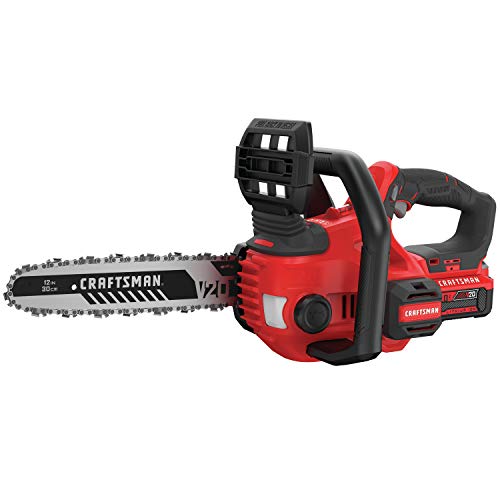
CRAFTSMAN V20 CMCCS620M1
CRAFTSMAN V20 CMCCS620M1
Best for: Quick cordless trimming in tight spaces and light yard cleanup.
The Craftsman V20 is the compact cordless pick for quick, precise cuts in small or tight spaces. Its 12-inch bar and 4.0Ah battery drive the chain at 44 feet per second, enough to move through branches fast without lugging a gas unit, and the whole saw weighs just 9.9 pounds. A bubble level built into the body helps you keep cuts level, while auto oiling and tool-free tensioning keep the chain in good shape with little effort. The compact frame fits between branches where longer saws cannot go, and the VERSATRACK hook lets the saw hang on a wall rail between jobs.
Which One Fits Your Situation
You Heat With Wood and Cut Regularly
Pick the Husqvarna 455 Rancher. Gas power and a 20-inch bar move through firewood rounds all day without waiting on a charger, and the 55.5cc engine holds its speed in dense hardwood. Keep fuel mixed, the chain sharp, and the bar oiled, and this saw will carry a whole heating season. The weight is the trade-off, so plan on ground-level cutting and take breaks on long sessions.
You Want Quiet Cuts Without Fuel and Fumes
Pick the Makita XGT 18-Inch Kit or the BLACK+DECKER LCS1240, depending on the size of your wood. The Makita handles thick limbs with a fast chain and an 18-inch bar, while the LCS1240 stays light for pruning and small branches. Both fire up with a trigger pull and run quietly enough to use early in the morning. Keep a spare battery charged if your sessions run long.
You Work Close to the House With an Outlet Nearby
Pick the BLACK+DECKER CS1518. Corded power never fades mid-cut, and the 18-inch bar with a 15-amp motor handles storm limbs and firewood rounds near the driveway. Run a heavy-duty outdoor extension cord, keep the cord behind you while cutting, and the saw will work as long as you do. It is the simplest way to get big-bar cutting capacity without gas or batteries.
You Need a Light Saw for Pruning and Tight Spaces
Pick the CRAFTSMAN V20 CMCCS620M1. At 9.9 pounds with a compact 12-inch bar, it slips between branches and cuts overhead without wearing out your arms. The bubble level helps keep cuts straight, and the 4.0Ah battery covers a normal pruning session. It is the easiest saw in this guide to grab, use, and hang back on the wall when the job is done.
Common Mistakes
Buying a bar longer than the wood you cut, which adds weight and makes the saw harder to control.
Running the chain dry by forgetting to check the bar oil level before each session.
Cutting with a dull chain, which forces you to push the saw and raises the chance of kickback.
Ignoring chain tension, since a loose chain can slip off the bar and a tight chain wears the bar fast.
Cutting above shoulder height or on a ladder, where a kickback leaves no safe way to step back.
Frequently Asked Questions
Can a 12-inch chainsaw cut firewood?
A 12-inch saw cuts firewood rounds up to about 10 inches across in one pass, and it can work through larger rounds by cutting from two sides. It suits small logs, branches, and kindling well. For rounds wider than 12 inches, an 18-inch or 20-inch bar saves time and effort, since the chain clears the whole cut without rolling the log.
How long does a battery chainsaw run on one charge?
Runtime depends on the battery size, the bar length, and how hard the wood is. The BLACK+DECKER LCS1240 averages 60 cuts through 4×4 pine on a single charge, which covers a normal pruning session. Thick hardwood drains a battery much faster than soft pine. Keep a second battery charged for long jobs, and let a hot battery cool before charging it again.
What safety gear should I wear with a chainsaw?
Wear chainsaw chaps, heavy gloves, eye protection, and hearing protection every time you cut. Steel-toe boots protect your feet from a dropped saw, and a helmet with a face shield guards against flying chips and falling branches. Check that the chain brake works before the first cut, and keep bystanders and pets well clear of the cutting zone.
How often should I sharpen the chain?
Sharpen the chain when it throws dust instead of chips, when you must push the saw to make progress, or when cuts drift to one side. Light yard use may need a touch-up every few sessions, while heavy firewood cutting can dull a chain in a single afternoon. A sharp chain cuts faster, runs cooler, and keeps the saw safer in your hands.
C
Carros Editorial Team
We compare specs, materials and verified owner reviews before a product earns a spot. Rankings are never paid.
Affiliate disclosure. As an Amazon Associate we earn from qualifying purchases at no extra cost to you. Prices accurate as of the date shown.
The best rechargeable CR123A batteries compared by chemistry, voltage and charger: SureFire LiFePO4, Tenergy and Nitecore RCR123A cells, plus the safety checks that matter first.
The best batteries for the Traxxas 1/16 E-Revo VXL compared: Traxxas Series 1 NiMH, HRB and Gens ace 2S 2200mAh LiPo packs, fit, connectors, parallel running, and charging safety.
How to choose a 510 thread battery for Brass Knuckles vape cartridges: voltage ranges, draw vs button activation, cartridge fit, charging, and safety checks explained.
How to pick a stereo keyboard amplifier with balanced line outputs, from power and speaker size to XLR outs, stereo linking, and the five models that set the standard.
A radial drill press swings its head out from the column to reach wide boards and off-centre holes. Learn how swing, spindle travel, speeds and chuck size decide the right machine.
Diamond-frame commuter e-bikes explained: fit, motor feel, battery range, and the equipment that makes a daily ride work, plus the mistakes to avoid before buying.
Find the best tablets under 125 for streaming, reading, school and family use. Compare five budget tablets with strong battery life and sharp displays.
Find the best window fans to cool a room with our guide to twin-blade models, thermostats, remotes, and window fit — compare airflow, noise, and controls.


 CRAFTSMAN V20 CMCCS620M1