We independently review everything we recommend. When you buy through our links, we may earn a commission. As an Amazon Associate we earn from qualifying purchases.
Best Bottom Paint for Trailered Boats 2: 5 Antifouling Picks for Trailered Hulls
Best bottom paint for trailered boats 2: five antifouling paints for trailered hulls, compared by season length, copper load, hull material, and launch window.
Best bottom paint for trailered boats 2: five antifouling paints for trailered hulls, compared by season length, copper load, hull material, and launch window.
Disclosure: As an Amazon Associate, this site may earn from qualifying purchases made through links on this page.
OUR TOP PICK
TotalBoat Underdog Antifouling Bottom Paint, Black Gallon
A trailered boat lives a different life from a boat that stays in a slip all year. It sits on bunks, rides down the highway, launches, and comes back out of the water between trips. That cycle is hard on bottom paint. A coating that is built for a hull that never leaves the water can crack, flake, or wear thin where the bunks press against it, and a coating that needs constant immersion to stay active can lose its punch during long weeks on the trailer. This is the second roundup for this keyword on this site, so the pool below is fresh, and every paint here was checked on its Amazon US listing and found in stock at the time of writing. The notes below name the copper load as a number out of 100, exactly as the listings state it. Match the paint to your hull material first, then to your fouling conditions, and the rest of the choice gets simple.
The five paints in this roundup are all antifouling bottom paints made for hulls that spend time out of the water, and each one is a distinct product line rather than a second can of the same paint in another color. They cover the main choices a trailered-boat owner faces: ablative paint that wears away a little at a time and exposes fresh biocide, hard paint that stays put and stands up to trailering and beaching, water-based paint that cleans up with soap and water, and a copperless formula for aluminum hulls and waters where copper is restricted.
At a Glance
Paint
Type
Copper load
Hulls
TotalBoat Underdog
Single-season ablative
24
Fiberglass, wood, steel
Interlux Bottomkote NT
Hard antifouling
Not stated on listing
Fiberglass
TotalBoat JD Select
Single-season ablative, water-based
25.5
Fiberglass, wood, steel
TotalBoat Spartan
Multi-season ablative
38
Fiberglass, wood, steel
TotalBoat Krypton
Ablative, copperless
0, dual biocide
Aluminum, fiberglass, wood, steel
How to Choose
Ablative or hard. An ablative paint wears away slowly as the boat moves through the water, and each layer that wears off exposes fresh biocide underneath. That self-polishing action keeps growth from getting a foothold, and it means less paint builds up season after season, so the next repaint needs less sanding and scraping. A hard paint does not wear away. It stays on the hull as a tough film, which makes it a strong match for a trailered boat that gets beached or dragged onto bunks, because the coating is not meant to shed. The trade is that a hard paint can build up over several seasons, and once it is worn thin in spots it needs a full recoat rather than a light touch-up.
Copper load. Listings state copper load as a number out of 100, and a higher number means more cuprous oxide biocide in the can. A 24 or 25.5 load handles low-to-moderate fouling, which is what most trailered boats meet, since the hull spends much of its life out of the water. A 38 load is built for high fouling, where the boat sits in warm, nutrient-rich water for long stretches between launches. More copper is not automatically better. It is a match for heavier growth, and on a hull that is out of the water most of the week it adds little.
Hull material decides first. Copper-based paint and aluminum do not mix. Cuprous oxide next to aluminum sets up galvanic corrosion, and the listing for every copper paint below says so plainly: not for aluminum. If your hull is aluminum, or you have an aluminum outdrive or pontoon logs to protect, the only pick in this roundup for you is the copperless one. Fiberglass, wood, and prepared steel take copper paint without that worry. Check the primer the maker names, too. A barrier-coat primer under the antifouling layer protects the hull and gives the paint something to hold onto, and skipping it is the most common reason a fresh bottom job peels.
Water-based or solvent-based. Water-based paint cleans up with soap and water and carries less odor while you work. Solvent-based paint has a longer track record and a wider range of recoat windows. Either one works on a trailered hull. The practical difference is the working day: water-based paint rewards a steady pace and a clean brush, while solvent-based paint forgives a slower hand.
Coverage and launch windows. A gallon of the paints below that publish a coverage figure covers about 500 square feet, which is enough for one full coat on a mid-size trailered boat with a little left over for the waterline and the keel. Buy a second gallon if you want two coats, and do not stretch one gallon across two coats. Each listing names a minimum dry time before launch and a recoat window between coats. Plan the paint day around those numbers, not around the weather alone, and remember that a trailered boat has no maximum dry time to launch on an ablative paint: it can sit on the trailer for weeks after painting and still work when it hits the water.
The Picks
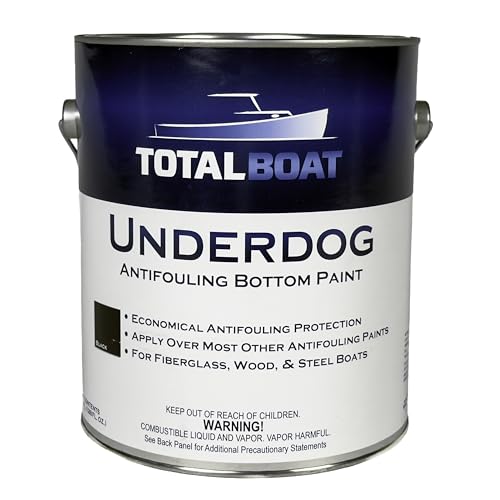
1. TotalBoat Underdog Antifouling Bottom Paint, Black Gallon
Top Pick
1. TotalBoat Underdog Antifouling Bottom Paint, Black Gallon
Underdog is the most directly trailered-boat paint in this roundup, and its listing says so in the title: ideal for trailered boats. It is a single-season ablative paint with a 24 copper biocide load, made for fiberglass, wood, and steel hulls in salt and fresh water, and it is built for low-to-moderate fouling. The ablative film wears away as the boat moves, exposing fresh biocide and holding back barnacles, slime, weeds, algae, and zebra mussels, while the wear itself keeps paint from building up year after year.
The working numbers are the reason it leads the list. Coverage runs 500 square feet per gallon, recoat time runs 1.5 to 6 hours, and the minimum dry time to launch runs 6 to 16 hours. There is no maximum dry time to launch, so a boat painted on a Saturday can sit on the trailer for a month and still be ready to launch. That is the exact flexibility a trailered boat needs, and it is the detail to check on any paint you compare against this one.
One note on the listing itself: the title and the description both name a 24 copper load, while one detail-table field on the same listing shows 25.5. We go with the title and description figure here. The listing names TotalBoat TotalProtect epoxy barrier-coat primer as the recommended primer, and it states plainly that the paint is not for aluminum. If your hull is aluminum, skip to the Krypton pick below.
2. Interlux Bottomkote NT Antifouling Bottom Paint, Black Gallon
Runner-Up
2. Interlux Bottomkote NT Antifouling Bottom Paint, Black Gallon
Bottomkote NT is the hard paint in this roundup, and it is the pick for a hull that gets beached, dragged onto bunks, or trailered over rough ramps. It is a hard antifouling paint from Interlux, made for fiberglass, with a semi-gloss finish and a flake-resistant formula. Where an ablative paint sheds a little with every trip, a hard paint stays put, and that is the point: the coating is meant to take the rubbing and scraping that comes with trailering and still be there at the end of the season.
The listing is thinner on numbers than the TotalBoat listings. It does not publish a copper load or a coverage figure, and it does not name a launch window, so you will want to read the can and the Interlux data sheet before you plan the paint day. What it does publish is the part that matters most for the choice: this is a hard paint, not an ablative one, and its surface is fiberglass. The gallon can weighs 17.7 pounds, which tells you it is a full, heavily loaded gallon rather than a thin one.
3. TotalBoat JD Select Water-Based Antifouling Bottom Paint, Black Gallon
3. TotalBoat JD Select Water-Based Antifouling Bottom Paint, Black Gallon
JD Select is the water-based pick, and it is the easiest paint in this roundup to live with while you apply it. It is a single-season ablative paint with a 25.5 copper load, made for fiberglass, wood, and steel hulls in salt and fresh water, and it handles low-to-moderate fouling. The water-based formula brushes, rolls, or sprays on, cleans up with soap and water, and carries less odor than a solvent-based paint, which matters when you are painting under a carport or in a garage with the door half open.
The performance numbers match the Underdog pick almost exactly: 500 square feet per gallon, a self-polishing ablative film that wears away to expose fresh biocide, and less paint build-up for easier prep next season. The difference is the carrier. JD Select is water-based, Underdog is solvent-based, and the choice between them is a choice about the working day rather than about fouling protection. Both are single-season paints, both carry a copper load in the mid-20s, and both are made for the same hull materials.
4. TotalBoat Spartan Multi-Season Antifouling Bottom Paint, Black Gallon
4. TotalBoat Spartan Multi-Season Antifouling Bottom Paint, Black Gallon
Spartan is the heavy-fouling pick, and it is the only multi-season paint in this roundup. It carries a 38 copper load, the highest in the list, and it is made for fiberglass, wood, and steel hulls in high fouling conditions. The ablative film wears away to expose fresh biocide, just like the single-season paints, but the higher copper load and the multi-year build mean it keeps working through seasons where a lighter paint would give out early.
The practical payoff is in the maintenance schedule. Spartan needs only one maintenance coat each season, and the ablative wear keeps paint from building up, so the prep work each year stays light. That is a real saving on a trailered boat, where the paint job happens on the driveway and the clock is your own time. The listing names the same hull materials as the other TotalBoat copper paints, and the same rule applies: not for aluminum.
Choose Spartan when your boat sits in warm water for long stretches between trips, when the growth on the hull at haul-out is heavy, or when you want to stretch the time between full paint jobs. Choose a single-season paint when your water is cooler, your fouling is light, or your boat is out of the water most of the week.
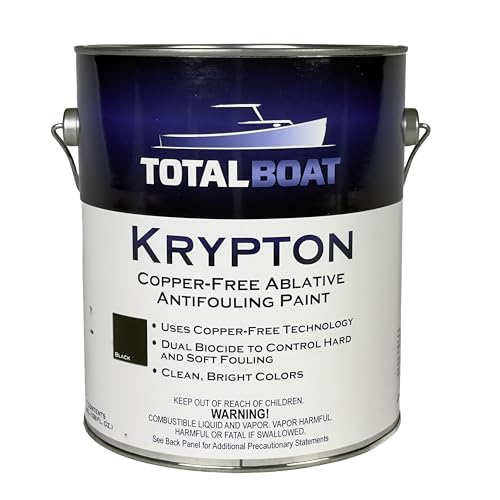
5. TotalBoat Krypton Antifouling Bottom Paint, Black Gallon
5. TotalBoat Krypton Antifouling Bottom Paint, Black Gallon
Krypton is the aluminum pick, and it is the only paint in this roundup that can go on an aluminum hull. It is a copperless ablative paint with a dual biocide formula that combines Econea and zinc, and it is made for aluminum, fiberglass, wood, and steel hulls, plus outdrives and other metals. That breadth is the point: copper paint next to aluminum sets up galvanic corrosion, so an aluminum boat, a pontoon boat, or a fiberglass boat with an aluminum outdrive needs a paint without copper in it.
The formula is aimed at high slime and algae growth, and at waters where copper is restricted, so it is not a compromise pick. It is an ablative paint, so it wears away gradually to expose fresh biocide and to keep paint from building up, which makes the next season’s prep easier. The listing does not publish a coverage figure in the fields we checked, so measure your hull and buy with a margin, and check the can for the coverage number before you open it.
Choose Krypton when your hull is aluminum, when you have aluminum running gear to protect, or when your water restricts copper. Choose a copper paint when your hull is fiberglass, wood, or steel and copper is allowed, because the copper paints in this roundup publish fuller working numbers and a longer track record on those hulls.
Comparison Table
Paint
Type
Copper load
Coverage
Hulls
Best for
TotalBoat Underdog
Single-season ablative
24
500 sq ft/gal
Fiberglass, wood, steel
Trailered boats, flexible launch
Interlux Bottomkote NT
Hard antifouling
Not stated
Not stated
Fiberglass
Beaching and rough trailering
TotalBoat JD Select
Single-season ablative, water-based
25.5
500 sq ft/gal
Fiberglass, wood, steel
Easy cleanup, mild odor
TotalBoat Spartan
Multi-season ablative
38
Not stated
Fiberglass, wood, steel
High fouling, fewer full paint jobs
TotalBoat Krypton
Ablative, copperless
0, dual biocide
Not stated
Aluminum, fiberglass, wood, steel
Aluminum hulls, copper-restricted water
Which One Fits Your Situation
A fiberglass trailered boat in light fouling. Underdog is the direct match. It is named for trailered boats on its own listing, it is a single-season ablative with a 24 copper load, and it has no maximum dry time to launch, so the boat can sit on the trailer for weeks after painting. JD Select is the same job in a water-based formula when cleanup and odor matter more to you than anything else.
A boat that gets beached or dragged onto bunks. Bottomkote NT is the pick. A hard paint stays on the hull where an ablative paint sheds, and the flake-resistant, semi-gloss film is built for that rubbing. Accept that the listing publishes fewer numbers, and read the can before you plan the day.
A boat that sits in warm, heavy-fouling water. Spartan is the pick. Its 38 copper load and multi-season build are made for growth that a single-season paint would not hold back, and one maintenance coat a season keeps the job light.
An aluminum hull, a pontoon boat, or an aluminum outdrive. Krypton is the only pick in this roundup for you. It is copperless, with a dual biocide of Econea and zinc, and it is the paint to use wherever copper is restricted. Do not substitute a copper paint here.
A boatyard that asks for water-based paint. JD Select is the pick. It is water-based, it cleans up with soap and water, and its numbers match the solvent-based single-season paints in this roundup.
FAQ
How much paint do I need for a trailered boat?
A gallon of the paints in this roundup that publish a coverage figure covers about 500 square feet, which is one full coat on a mid-size trailered boat with a little left for the waterline and the keel. Measure your hull, and buy a second gallon when you want two coats. Do not stretch one gallon across two coats.
Can I use copper bottom paint on an aluminum hull?
No. Copper next to aluminum sets up galvanic corrosion, and every copper paint in this roundup states that it is not for aluminum. Use the copperless pick, Krypton, on aluminum hulls, pontoon logs, and aluminum outdrives.
What is the difference between ablative and hard bottom paint?
An ablative paint wears away slowly as the boat moves, exposing fresh biocide and keeping paint from building up. A hard paint stays on the hull as a tough film and stands up to beaching and trailering. Ablative paint needs a lighter touch at repaint time; hard paint needs a full recoat once it wears thin.
How long can a painted boat sit on the trailer before launch?
On the ablative paints in this roundup, there is no maximum dry time to launch. A boat painted on a weekend can sit on the trailer for weeks and still launch without a problem. Check the minimum dry time on the listing before you launch, and respect the recoat window between coats.
Do I need a primer under bottom paint?
Yes, on a bare hull or a hull that has been sanded back. The listings name an epoxy barrier-coat primer as the recommended base, and it protects the hull while giving the antifouling paint something to hold onto. Skipping primer is the most common reason a fresh bottom job peels.
Is water-based bottom paint as strong as solvent-based paint?
For a trailered boat in low-to-moderate fouling, yes. JD Select matches the solvent-based single-season paints in this roundup on copper load and coverage, and its difference is in the working day: easier cleanup and milder odor. In high fouling, the multi-season solvent-based Spartan is the stronger match.
Final Take
A trailered boat needs a bottom paint that survives the trailer as well as the water, and the five paints above cover that job from every angle that matters. Underdog is the most directly trailered-boat paint, with a launch window that forgives a boat sitting on the trailer for weeks. Bottomkote NT is the hard paint for hulls that get beached and dragged. JD Select is the water-based pick for an easy working day. Spartan is the heavy-fouling pick for warm water and long sits. Krypton is the copperless pick for aluminum hulls and copper-restricted waters.
Match the paint to your hull material first, then to your fouling conditions, and check the coverage, recoat, and launch numbers on the listing before you open the can. The hull material rule is the one that cannot bend: copper paint never goes on aluminum. Get that right, and any of the five picks above will do the job it was made for.
C
Carros Editorial Team
We compare specs, materials and verified owner reviews before a product earns a spot. Rankings are never paid.
Affiliate disclosure. As an Amazon Associate we earn from qualifying purchases at no extra cost to you. Prices accurate as of the date shown.
Best saltwater trolling motors 2: five transom and bow-mount motors for salt water, compared by thrust, shaft length, voltage, mount, and battery needs.
Best exhaust for 6 4 hemi 2: five cat-back systems for the Ram 2500 and 3500 6.4L HEMI, compared by material, exit layout, sound character, and wheelbase fit.
Discover the best ceramic pet fountains for multi pet homes, with large reservoirs, quiet pumps, 360-degree access, and hygienic ceramic for cats and dogs.
Best 3 inch stainless muffler: 5 universal 3-inch stainless mufflers from Flowmaster, MagnaFlow and LCGP, compared by inlet layout, body size and build.
Four firearm carbon remover solvents compared by soak use, bottle format and named parts, from bolt carriers and bores to suppressor baffles and chambers.
Compare four luxury gas grills from Napoleon, Broil King and Lion by burner output, cooking area, stainless build and the rotisserie hardware included.


 1. TotalBoat Underdog Antifouling Bottom Paint, Black Gallon
 2. Interlux Bottomkote NT Antifouling Bottom Paint, Black Gallon
 4. TotalBoat Spartan Multi-Season Antifouling Bottom Paint, Black Gallon
 5. TotalBoat Krypton Antifouling Bottom Paint, Black Gallon