
Key takeaways
- Power-loomed flat weave or low pile: roundups describe this as the most durable machine-made construction. Both the Safavieh and Nourison rugs listed above have a pile height of about a quarter inch.
- Bound or heat-treated edges: reviewers say these resist fraying better than plain cut edges.
- Backing: latex backing adds grip, but the backing can hold moisture against a deck. Many makers advise lifting the rug to dry after a heavy rain, so read the care instructions.
- Reversible designs: these give two looks and double the wear life, but they usually have a thinner feel.
For most patios and decks, a flat-weave or low-pile polypropylene rug is the best outdoor rug under the 150-dollar ceiling, with Safavieh Courtyard and Nourison Aloha as the machine-made names to start with, and reversible plastic-style mats for the tightest budgets. Braided rugs suit casual spaces, and natural-fiber looks suit covered porches only. The guide below explains how to choose by material, size and weather exposure.
Our top picks
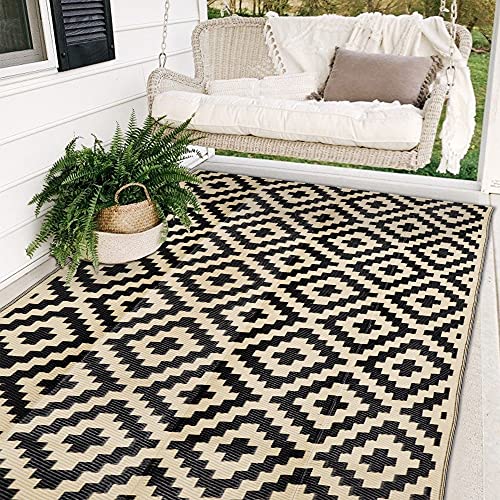
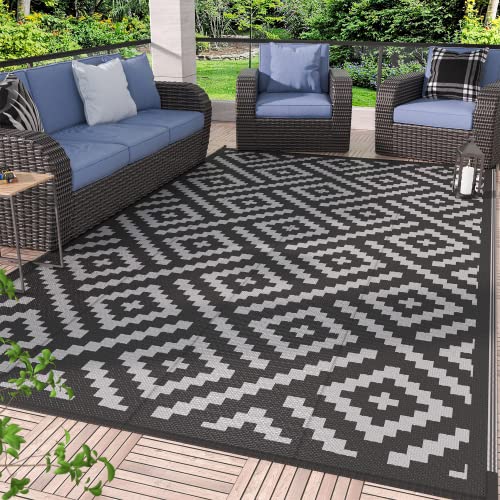

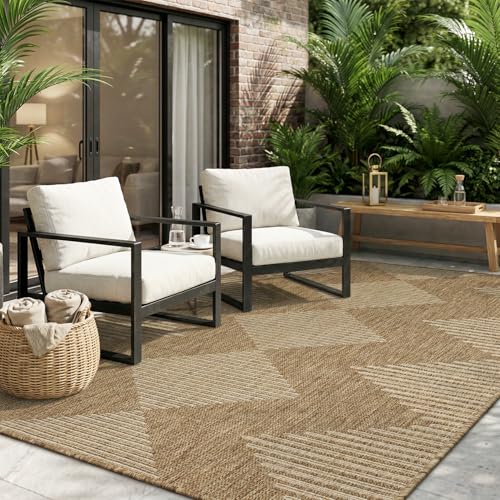
As an Amazon Associate we earn from qualifying purchases at no extra cost to you.
Outdoor rugs at a glance
| Rug | Material and construction (as stated) | Best for | Limits |
|---|---|---|---|
| Safavieh Courtyard CY2098 | The maker lists 88 percent polypropylene and 12 percent polyester, power-loomed, 1/4 inch pile, latex backing | General patios and covered decks, wide range of sizes | Latex backing can trap moisture against a surface, so lift it to dry after heavy rain |
| Nourison Aloha | The maker lists 100 percent polypropylene, power-loomed, 0.25 inch height, latex backing, OEKO-TEX certified | Higher-traffic patios and entry areas | Patterned, textured high-low surface can hold debris |
| nuLOOM Asha | Listings show about 90 percent polypropylene and 10 percent polyester, machine made, described as UV-resistant and hose-cleanable | Homes with kids and pets who want easy cleaning | Specifications vary by size and colorway, so read the listing |
| nuLOOM braided rugs | A budget braided style named in roundups; specifications were not verified | Casual porches and sunrooms | Braided ridges can collect dirt and are harder to sweep |
| GENIMO reversible rug | Roundups describe a reversible polypropylene mat with a carry bag; specifications were not verified | Camping, picnics, and flexible patio use | Feels more like a mat than a woven rug |
| SAND MINE reversible rug | A reversible mat-style rug named in roundups; specifications were not verified | Tightest budgets | Thinner, mat-like feel |
| Jonathan Y Ourika | Retail listings show 100 percent polypropylene, power-loomed, about 0.19 inch pile, no backing (a rug pad is recommended) | Style-focused patios | Thin; plan on a pad |
Most of the sources behind these names are affiliate-style roundups and not laboratory tests. The Safavieh and Nourison specifications above come from the makers’ own product pages, and the other rows rely on retail listings or reviewer descriptions, so check each maker’s listing for the exact size you plan to buy.
Why polypropylene dominates the budget range
Reviewers agree on one point: polypropylene is the most practical fiber for an outdoor rug at this price. It does not absorb water the way cotton and jute do, it resists UV fading better than many alternatives, and it dries relatively fast after rain. That does not make it indestructible. Strong sun still wears down colors over several seasons, and heavy furniture can crush the pile. Polyester blends, such as the 12 percent blend that Safavieh lists, are common and are not a drawback by themselves. Safavieh lists some colorways of the Courtyard line with slightly different fiber percentages and pile heights, so check the exact rug.
Recycled plastic straw rugs are mentioned as a close second for wet climates, and they have a flatter, more mat-like surface. Natural fibers like jute and sisal look good but can mold when they stay wet, so they belong only under a roof.
Construction details that matter
- Power-loomed flat weave or low pile: roundups describe this as the most durable machine-made construction. Both the Safavieh and Nourison rugs listed above have a pile height of about a quarter inch.
- Bound or heat-treated edges: reviewers say these resist fraying better than plain cut edges.
- Backing: latex backing adds grip, but the backing can hold moisture against a deck. Many makers advise lifting the rug to dry after a heavy rain, so read the care instructions.
- Reversible designs: these give two looks and double the wear life, but they usually have a thinner feel.
Choosing the right size
A rug that is too small makes a patio look unfinished and can create a trip hazard if the edge sits awkwardly under a chair. For a dining area, choose a rug large enough that all four chair legs stay on the rug even when the chairs are pulled out, which usually means adding about two feet on every side of the table. For a seating group, a common guide is to have at least the front legs of sofas and chairs on the rug. Common sizes are 5 by 8 and 8 by 10 feet, and Safavieh lists sizes from small accent rugs up to large room sizes for the Courtyard line.
Measure the space and leave a margin from walls, railings and doors so that water can drain and the rug does not block openings.
Weather and placement notes
- Covered versus open: a rug on a fully exposed deck faces more sun and rain than one under a roof. Fully exposed rugs usually wear faster and fade sooner.
- Airflow: if the rug sits over a wooden deck, lift and dry it periodically. Standing water under a rug can discolor or stain some surfaces.
- Heat and fire: polypropylene can melt when exposed to high heat. Keep rugs well clear of grills, fire pits, patio heaters and any hot embers, following the manual for each heat source.
- Pets and kids: a tight weave is easier to hose and sweep. Listings describe the Asha as easy to clean, which suits family use.
Care basics
Most makers suggest vacuuming or shaking out the rug, then spot cleaning with mild soap and water. Hose it down, let it drain, and dry it fully before folding or storing. Follow the instructions on each rug for what cleaning products and machines are allowed. Many polypropylene rugs are labeled as easy to clean, but this applies to the rug itself and not necessarily to what lies underneath.
Pick this rug if…
| Pick | If you… |
|---|---|
| Safavieh Courtyard | want a wide choice of sizes and patterns from a machine-made line with published specifications |
| Nourison Aloha | need a rug for foot traffic and prefer a maker that lists 100 percent polypropylene |
| nuLOOM Asha | have children or pets and want an easy-clean blend |
| Reversible mat-style rug (GENIMO, SAND MINE) | need the lowest cost, or a rug that folds into a bag for travel |
| Braided rug | want a relaxed, casual texture on a covered porch |
Alternatives worth considering
- Rugs USA Everywhere hand-braided rug: a roundup names it a top pick; listings show 100 percent polypropylene with about 0.30 inch pile, and larger sizes often exceed a tight cap.
- Outdoor tiles or deck mats: if you only want a defined surface under a chair, interlocking tiles and mats are another option.
Common mistakes to avoid
The first mistake is buying a rug that is too small. A rug that only just fits under the table leaves chair legs dropping off the edge, which is both a tripping hazard and a source of wear on the rug edge. The second is ignoring drainage. A rug laid over a solid surface with no airflow underneath can stay damp for days after rain, and that is when mildew spots tend to appear. The third is assuming every rug sold for outdoor use handles every climate. Makers describe their rugs as weather-resistant, but long, direct sun, freezing temperatures and standing water all shorten life, so match the rug to how exposed your space is.
It also helps to think about the surface underneath. Rugs with latex backing grip well on smooth tile and concrete, but some deck finishes can react with backing materials over time. If the maker’s page or manual says to use a rug pad or avoid certain surfaces, follow that advice. A thin breathable pad, where the maker allows one, can add grip and let air move beneath the rug.
Finally, consider how you will store it. Reversible mat-style rugs fold into a carry bag, while woven rugs in large sizes are better rolled loosely, pattern side out, to avoid creases. Always let a rug dry completely before rolling it up for storage.
Frequently Asked Questions
What material is best for an outdoor rug?
Polypropylene is the most commonly recommended material because it resists water, fading and mildew better than natural fibers. Polyester blends are common too. Natural fibers such as jute look attractive but are better kept under a roof.
Can an outdoor rug stay outside all year?
Many makers describe their rugs as weather-resistant, but long exposure to sun, snow and standing water shortens life. Storing the rug in the off-season, or at least lifting it to dry after storms, usually helps it last longer. Follow the care instructions for your rug.
Will a rug damage my wood deck?
A rug that stays wet can trap moisture and may stain or discolor the surface beneath. Lift the rug periodically, let the deck dry, and check what the maker and your deck finish say about contact. Latex backings in particular can hold moisture.
What size outdoor rug should I buy for a dining set?
Choose a rug that extends well beyond the table so the chairs stay on it when pulled out. A margin of about two feet on all sides is a common guide. Measure the table and the space before choosing between sizes such as 5 by 8 and 8 by 10.
Are outdoor rugs safe near a grill or fire pit?
Polypropylene can melt with heat, so keep rugs clear of grills, fire pits and heaters according to each product’s manual. Embers and hot grease can also damage the rug. When in doubt, move the rug away from heat sources.
How do I clean an outdoor rug?
Shake or vacuum it, spot clean with mild soap and water, rinse with a hose, and let it dry completely. Check the maker’s care label first, as methods and permitted products vary by construction.









