We independently review everything we recommend. When you buy through our links, we may earn a commission. As an Amazon Associate we earn from qualifying purchases.
5 Best Motorcycle Gloves for Safe Rides (November 2026)
Find motorcycle gloves that balance grip, airflow, and knuckle protection for daily commutes and weekend rides in warm and cool weather on the road.
Find motorcycle gloves that balance grip, airflow, and knuckle protection for daily commutes and weekend rides in warm and cool weather on the road.
Your hands work the controls every second of a ride, so gloves shape how safe and how comfortable that ride feels. A good pair guards your knuckles and palms in a slide, steadies your grip on the bars, and keeps wind and vibration from tiring your hands on a long day. A poor pair does the opposite: loose fingers bunch around the levers, damp palms slip on the grips, and stiff material turns every clutch pull into a chore. Choosing well matters more than most riders expect, because gloves are the one piece of gear you feel with every mile.
This guide compares five gloves that cover the most common riding needs, from a ventilated short-cuff glove for hot commutes to a full gauntlet for sport riding. Each pick states its protection, ventilation, and closure, so you can match the glove to your bike, your climate, and your hands before you buy.
Quick Picks
As an Amazon Associate we earn from qualifying purchases
Product
Best for
Key spec from title
Alpinestars SMX-1 Air V2
Hot-weather commuting
Hard polymer knuckle, leather and mesh
Alpinestars SP-8 V3
Sport riding with gauntlet coverage
Dual-density knuckle, full gauntlet leather
ILM GL4 Goatskin Leather Gloves
Leather protection at a modest outlay
Carbon fiber knuckle, goatskin leather
KEMIMOTO Motorcycle Gloves with Shell
Lightweight warm-weather riding
PVC hard shells, gel-padded palm
COFIT Full Finger Touchscreen Gloves
Short rides and trail use
Padded knuckles, breathable polyester
How to Choose
Protection Comes First
Hard armor on the knuckles and a reinforced palm are the two features that matter most when a glove meets the road. A hard shell spreads the force of an impact, while a palm slider or doubled leather lets your hand slide instead of catching and twisting. Certification gives you a point of comparison: gloves certified to EN 13594 carry a KP knuckle-protection mark and a stated level, while uncertified gloves may use pads that look protective but absorb little force. Leather resists abrasion far longer than polyester, so a leather palm is the safer choice for road riding even when a textile glove feels cooler. Read the listing for the armor type, the palm build, and the certification first.
Fit Decides Whether You Wear Them
A glove that fits poorly stays in a drawer, so fit deserves as much attention as armor. The glove should sit snug across the palm and fingers without pinching, and your fingertips should reach the ends without extra material folding over the levers. Pre-curved fingers help here, because they match the natural grip shape and reduce bunching when you hold the bars. Leather breaks in and molds to your hand over the first weeks, while textile keeps the fit it had on day one. Measure your hand around the knuckles, compare that number with the size chart on the listing, and size up when you fall between sizes or plan to wear a thin liner underneath.
Airflow and Coverage for Your Climate
Hot days call for mesh panels, perforations, and ventilation holes that move air across the back of the hand, while cool mornings call for a cuff that closes the gap between glove and jacket sleeve. A short cuff vents well and slips on fast, but it leaves the wrist exposed to wind and to road rash in a fall. A gauntlet cuff covers the wrist and seals out drafts, yet it traps more heat in traffic. None of the five gloves below claims a waterproof membrane, so plan on rain covers if you ride through storms. Match the cuff length and the venting to the weather you ride in most often, not to the weather you wish you rode in.
Closure, Touchscreen, and Daily Convenience
A hook-and-loop wrist strap is the most common closure here, and it works because you can tighten it with one hand and adjust it as leather breaks in. A gauntlet cuff adds a second layer of security over the jacket sleeve. Touchscreen fingertips matter more than they used to: every glove below lets you work a phone or GPS with thumb and index finger, so you can check a route without pulling a glove off at a stop. Care is simple but strict for leather pairs, which call for hand washing and air drying rather than a machine cycle. Check the care line on the listing before you buy.
The 5 Best Options
Alpinestars SMX-1 Air V2
Top Pick
Alpinestars SMX-1 Air V2
Best for: Warm-weather commuters who want certified protection with maximum airflow.
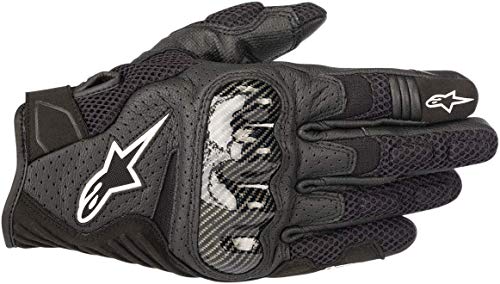
The SMX-1 Air V2 is the ventilated short-cuff glove in this group, built around full-grain leather and 3D mesh that move air across the back of the hand on hot days. A hard polymer knuckle takes the impact load, reinforced landing zones guard the palm, and pre-curved fingers with stretch inserts keep the controls feeling direct. Touchscreen fingertips let you work a phone without removing the glove, and the hook-and-loop closure holds the short cuff snug at the wrist. It is a CE-certified design, which puts it ahead of most gloves in its class for stated protection.
Alpinestars SP-8 V3
Runner-Up
Alpinestars SP-8 V3
Best for: Sport riders who want gauntlet coverage and certified knuckle protection.
The SP-8 V3 is the full gauntlet in this group, and the one sport riders reach for when coverage matters as much as protection. Full-grain goat leather forms the main body, a dual-density knuckle handles impacts, and a reinforced palm with a slider helps the hand move across the road instead of catching. The gauntlet cuff slides over the jacket sleeve to close the wrist gap, and the glove carries CE Level 1 KP certification to EN 13594:2015. Touchscreen fingertips keep the glove practical between sessions, and the leather breaks in over the first weeks of use.
ILM GL4 Goatskin Leather Gloves
The GL4 pairs goatskin leather with a carbon fiber hard knuckle, a combination usually found on gloves that cost far more. Ventilation holes across the back, fingers, and palm move air on warm days, while silicone anti-slip pads on the palm steady the grip and extra padding guards the little finger. Touchscreen-compatible thumb and forefinger let you work a phone without removing the glove, and an adjustable wrist tab sets the fit at the cuff. The glove suits riders who want real leather and hard armor at a modest outlay.
Specs
Goatskin leather construction
Carbon fiber hard knuckle protection
Silicone anti-slip pads on the palm
Ventilation holes across the back and fingers
Extra padding on the little finger
Touchscreen-compatible thumb and forefinger
Hook-and-loop wrist closure
Model number GL4
Best for: Riders who want leather and hard-knuckle protection without a premium badge.
Watch out for: No CE certification is stated, and the leather build suits warm and mild days rather than cold or wet ones.
ASIN: B0CYT3VWWR
KEMIMOTO Motorcycle Gloves with Shell
KEMIMOTO Motorcycle Gloves with Shell
Best for: Warm-weather riders who want a light, breathable glove with shell protection.
The KEMIMOTO glove is the lightest option here, a polyester glove with PVC hard shells over the knuckles and gel padding in the palm. Fine-fiber material with strong breathability keeps hands cool, while anti-slip palms and an adjustable hook-and-loop strap hold the glove steady on the bars. Touchscreen material on the thumb and index finger lets you work a phone without removing the glove. It is a practical pick for warm days, trail riding, and short trips where a heavy leather glove feels like too much.
COFIT Full Finger Touchscreen Gloves
COFIT Full Finger Touchscreen Gloves
Best for: Short rides and trail use on warm days, where a light glove beats a heavy one.
The COFIT glove is the simple warm-weather option in this group: breathable polyester with air vents, padded knuckles and palm, and a silicone gel palm that grips the bars. Conductive fiber on the index finger and thumb lets you work a phone without removing the glove, and a hook-and-loop wrist closure sets the fit in seconds. At 150 g per pair it barely registers on the hand, which makes it easy to wear for short rides, trail use, and days when a heavier glove would only add heat.
Which One Fits Your Situation
You commute every day in warm weather
Pick the SMX-1 Air V2. Its mesh panels and perforated leather move air in traffic, the hard knuckle covers the impact point most commuters worry about, and the short cuff slips on and off fast at each stop. Keep the SP-8 V3 for weekends, when the gauntlet cuff and extra coverage earn their keep.
You ride a sport bike on weekends
Pick the SP-8 V3. The gauntlet cuff closes the sleeve gap at speed, the dual-density knuckle and palm slider cover the two contact points in a slide, and the CE Level 1 KP certification gives you a stated standard rather than a guess. The ILM GL4 is the fallback when you want leather and a hard knuckle with a shorter cuff.
You want leather protection without a big spend
Pick the ILM GL4. Goatskin leather and a carbon fiber hard knuckle give you the two features that define a protective leather glove, with ventilation holes and a silicone-grip palm included. The SMX-1 Air V2 is the step up when you want the same leather feel with a CE certification and a mesh back for hotter days.
You need a light glove for short trips and trail riding
Pick the COFIT or the KEMIMOTO glove. Both are light, breathable, and easy to pull on, with touchscreen fingertips and a hook-and-loop wrist strap. The KEMIMOTO pair adds PVC hard shells and gel palm padding, while the COFIT pair is the lighter of the two. Neither carries a CE certification, so treat them as light-duty gloves for short rides rather than all-day road protection.
Common Mistakes
Buying a size too large and letting the fingers bunch around the levers, which dulls your feel for the clutch and brake.
Choosing a mesh glove for cold mornings, then riding with numb hands because the vents that cool you in summer chill you in winter.
Leaving a gap between the glove cuff and the jacket sleeve, which exposes the wrist to wind and to road rash.
Assuming padded knuckles mean hard armor: pads cushion a knock, while a hard shell spreads the force of an impact.
Machine-washing leather gloves, which dries the hide and stiffens the fit; hand wash and air dry instead.
Frequently Asked Questions
Do I need CE-certified gloves for street riding?
Certification is not a legal requirement for most street riders, but it is the clearest signal that a glove meets a stated protection standard. Gloves certified to EN 13594 carry a KP knuckle-protection mark and a level, so you can compare them directly. Uncertified gloves can still protect well, but you are relying on the maker’s word rather than a measured standard.
How should motorcycle gloves fit?
A good fit feels snug across the palm and fingers without pinching or cutting circulation. Your fingertips should reach the ends of the glove, and the material should not fold over the levers when you grip the bars. Leather breaks in over the first weeks, so a new leather glove can feel tight at first. Measure around your knuckles and compare the number with the size chart on the listing.
Can I use my phone while wearing motorcycle gloves?
Yes, if the glove has touchscreen-compatible fingertips. Every glove in this guide works with a phone or GPS through the thumb and index finger, so you can check a route or answer a call at a stop. Thicker winter gloves often lose this ability, so check the listing for touchscreen support before you buy if phone use matters to you.
How do I care for leather motorcycle gloves?
Hand wash leather gloves in cool water with a mild soap, then air dry them away from direct heat. Never use a machine cycle or a tumble dryer, since heat and tumbling dry the hide and stiffen the fit. Once dry, work a leather conditioner into the surface to keep the material supple. Textile gloves follow the same rule unless the listing states otherwise.
C
Carros Editorial Team
We compare specs, materials and verified owner reviews before a product earns a spot. Rankings are never paid.
Affiliate disclosure. As an Amazon Associate we earn from qualifying purchases at no extra cost to you. Prices accurate as of the date shown.
The best rechargeable CR123A batteries compared by chemistry, voltage and charger: SureFire LiFePO4, Tenergy and Nitecore RCR123A cells, plus the safety checks that matter first.
The best batteries for the Traxxas 1/16 E-Revo VXL compared: Traxxas Series 1 NiMH, HRB and Gens ace 2S 2200mAh LiPo packs, fit, connectors, parallel running, and charging safety.
How to choose a 510 thread battery for Brass Knuckles vape cartridges: voltage ranges, draw vs button activation, cartridge fit, charging, and safety checks explained.
How to pick a stereo keyboard amplifier with balanced line outputs, from power and speaker size to XLR outs, stereo linking, and the five models that set the standard.
A radial drill press swings its head out from the column to reach wide boards and off-centre holes. Learn how swing, spindle travel, speeds and chuck size decide the right machine.
Diamond-frame commuter e-bikes explained: fit, motor feel, battery range, and the equipment that makes a daily ride work, plus the mistakes to avoid before buying.
Find the best tablets under 125 for streaming, reading, school and family use. Compare five budget tablets with strong battery life and sharp displays.
Find the best window fans to cool a room with our guide to twin-blade models, thermostats, remotes, and window fit — compare airflow, noise, and controls.



 COFIT Full Finger Touchscreen Gloves